Alternator Pulley
Browse 23 Alternator Pulley part numbers with OE cross-reference and fitment notes for passenger cars, SUVs, pickups and vans. Export packing available - send an inquiry for price and lead time.
Product Categories
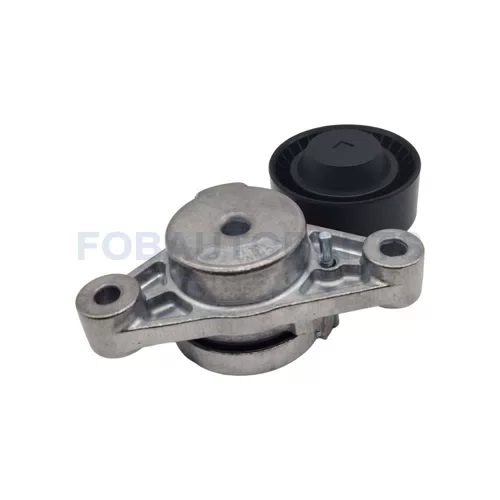
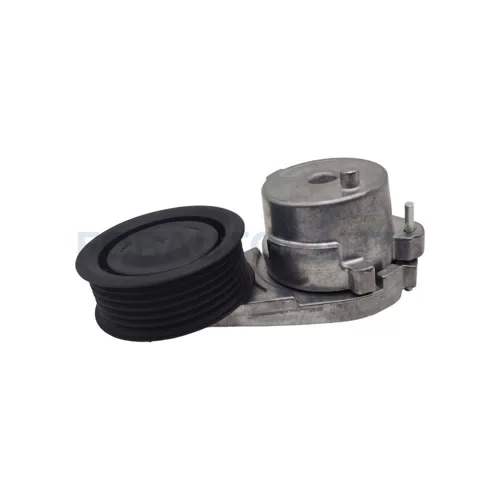
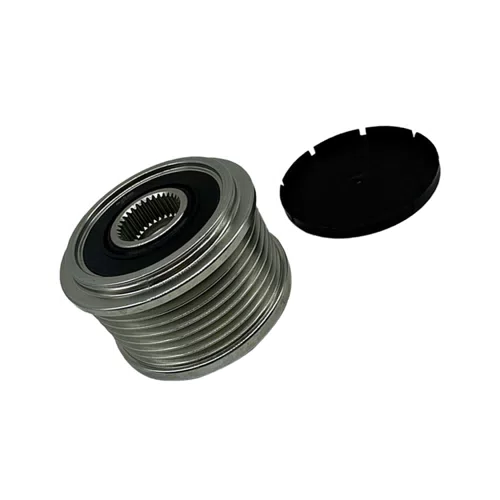
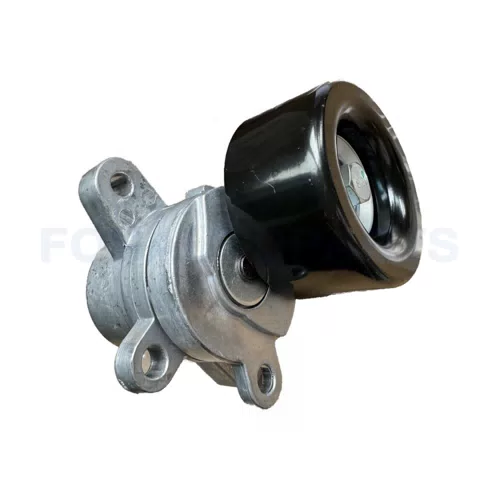
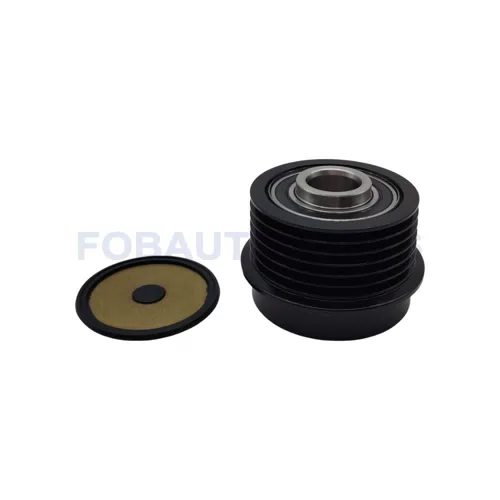
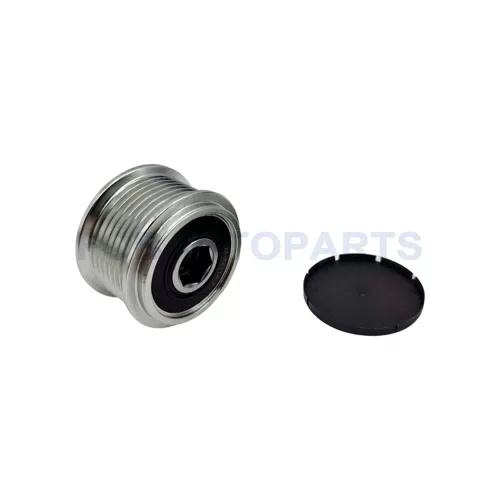
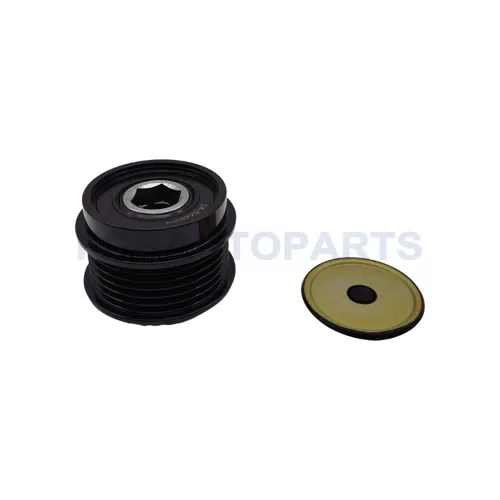
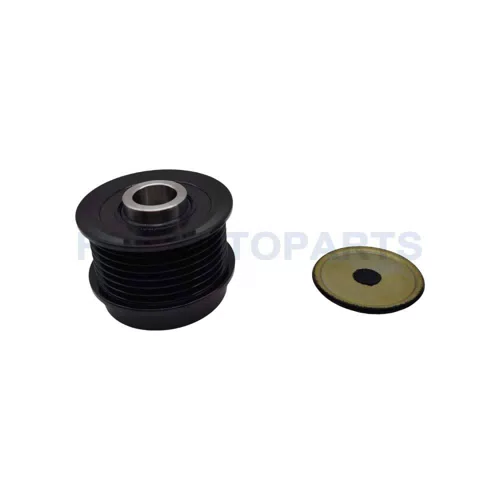
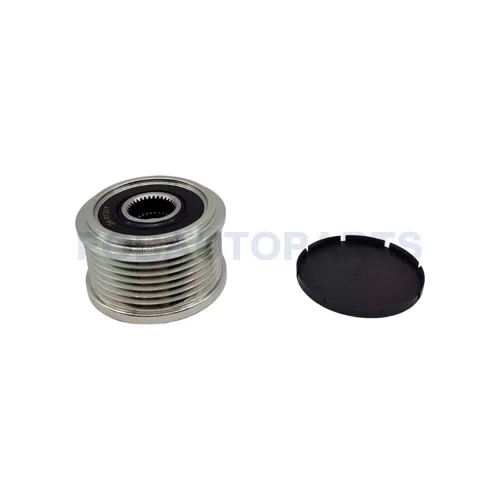
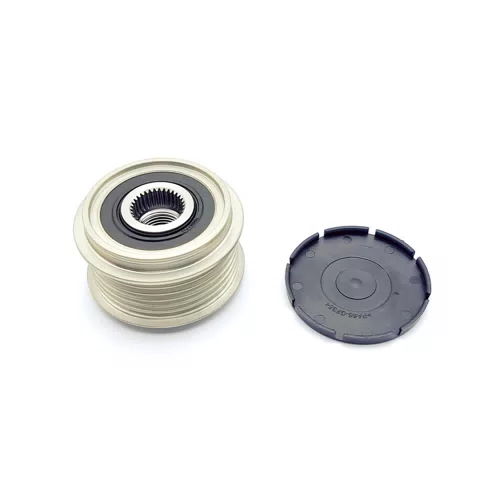
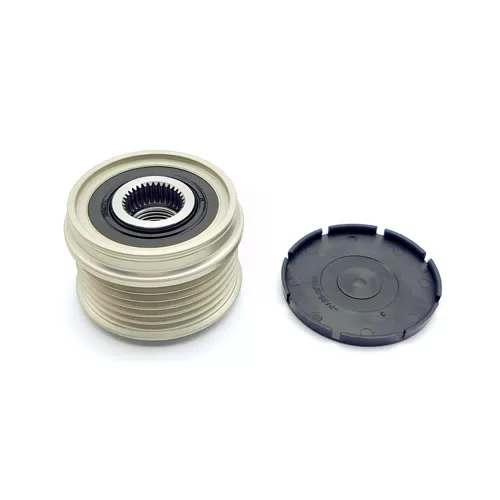
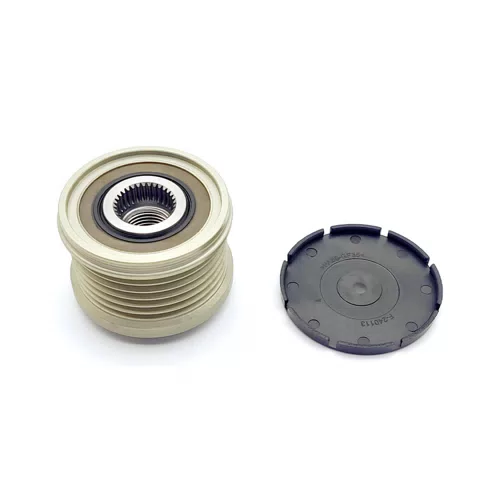
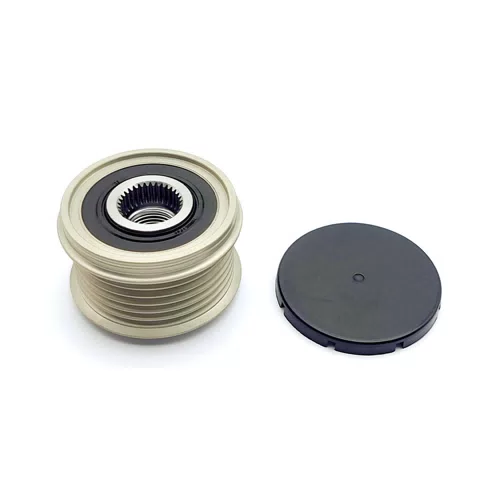
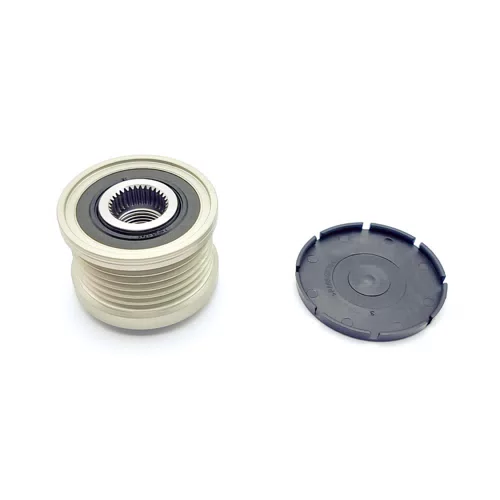
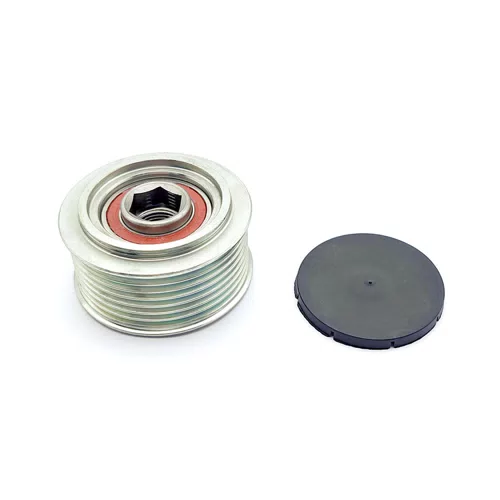
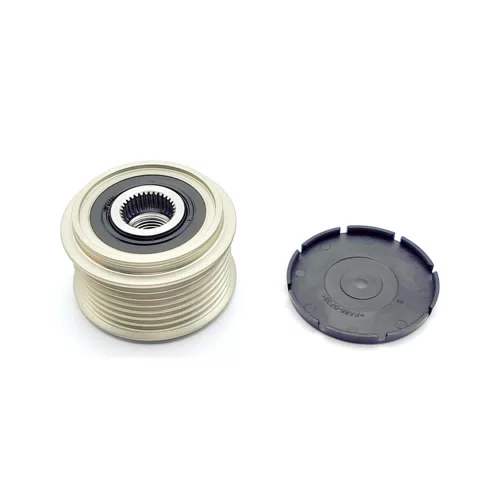
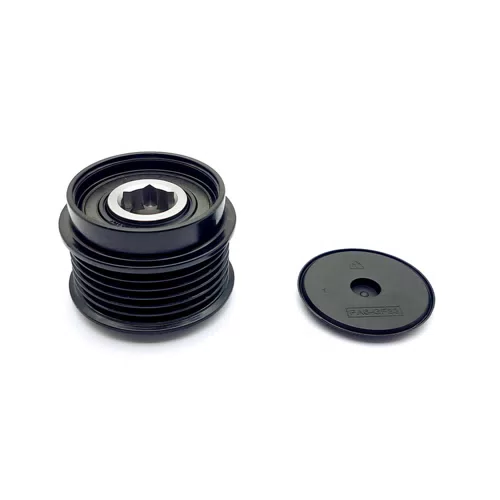
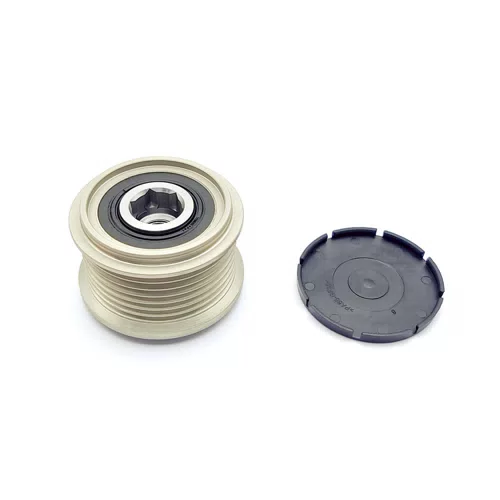
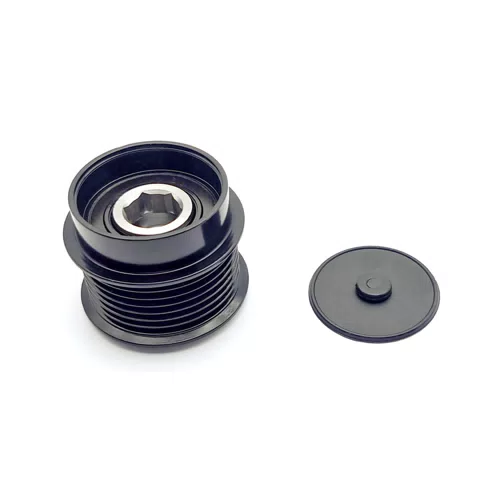
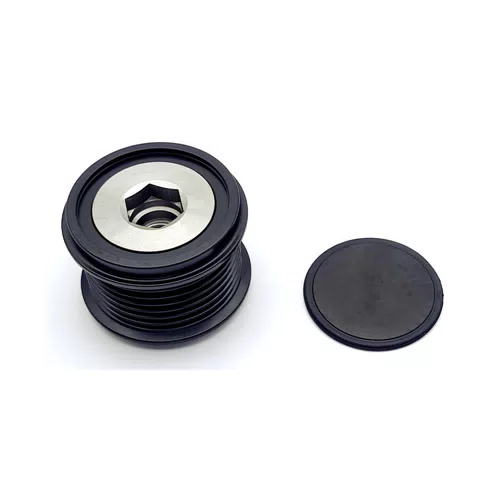
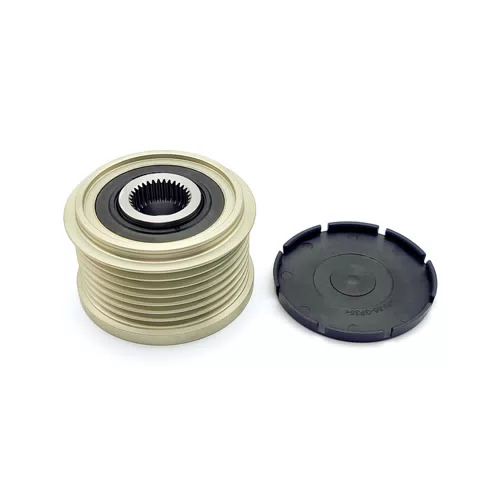
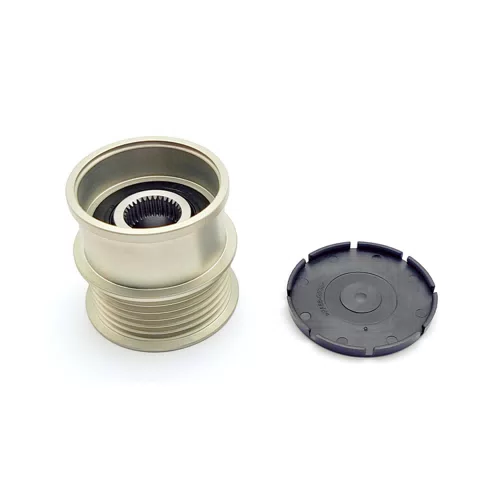

Buying Alternator Pulley by OE number
An alternator pulley is the small pulley bolted to the nose of the alternator shaft, and it is not the same part as a belt tensioner pulley or a crankshaft pulley even though all three appear in the same belt drive. Two constructions are sold under the name: a rigid pulley that is simply a machined wheel with the correct number of ribs, and an overrunning alternator pulley (OAP), also sold as an overrunning alternator decoupler, which contains a one-way clutch so the alternator rotor can keep spinning when the engine decelerates sharply. The outside diameter and rib count of both look identical on a bench, which is why enquiries arrive asking for a tensioner when the failed part is the alternator pulley.
This category carries 23 references, all of them the pulley alone rather than a complete alternator. The Toyota 27415 family is the largest block: 27415-0L020 for Ford Ranger TKE 2.2 TDCi and Land Rover Defender applications, 27415-0W010 for Daewoo Korando 2.9 D and the Toyota 2KD Hiace, 27415-0W040 for Camry 2.4 and Avensis, 27415-30010 for Yaris 1.8 VVTi and Hilux VIII 2.4 D, 27415-0T010 for Corolla 1.4 D, 27415-0T020 for Auris 1.8 and Verso 1.6. The aftermarket-numbered Toyota references sit alongside them: 24-91307 for Fortuner 2.5 D-4D 4WD, 24-82291 for RAV4 III 2.4 4WD and Corolla Rumion, 24-82289-4 for Land Cruiser Prado 2.8 D-4D and Sienna, and 24-82114-7. The Nissan 23151 block covers 23151-EB301 for Pick Up 2.5 Di and Pathfinder III, 23151-EL010 for Bluebird Sylphy and Cube, 23151-JA02A for Altima 2.5 and Primera 2.5 and 23151-6N200 for Primera 2.0 and X-Trail 2.5, with 23150-2W200 for the Interstar dCi 140. European and Korean applications are covered by 04E903201E for the VW and Audi 1.0 to 1.4 TSI engines, 7700110616 for Renault Espace IV 2.2 dCi and Megane III, LF18-18-W11 for Citroen C-Crosser and C4 Aircross, 37322-04630 for Hyundai Accent IV and V, and U201-18-W10 for Ford Transit 3.2 TDCi and the Ranger platform. Chinese applications are listed as 1025200XEB12 for Haval and NE14T0040020 for Changan.
Identification is done from the number stamped or laser-etched on the pulley face, not from the alternator part number and not from the vehicle. The same alternator is built with a rigid pulley for one market and an overrunning pulley for another, and swapping between them changes the belt behaviour rather than just the price. Bore type matters as much as diameter: some references are a straight shaft fit retained by a nut, others are a splined or hex bore that needs a specific removal tool, and a pulley pulled with the wrong tool takes the rotor shaft with it. Where the listing states the bore type, that is what the pulley was measured as, not a catalogue default.
The cross-reference numbers in each listing come from the aftermarket pulley programmes rather than from the vehicle manufacturer, so a buyer holding an INA, Gates or Bosch pulley number can match it against ours. Where a reference has been superseded, we list the current number and say so on the quotation instead of shipping the older one silently. If a number is not in this category, send it anyway: pulley references are frequently added against a buyer list rather than sourced from stock.
Failure of an overrunning pulley shows up before the alternator itself does. The classic symptoms are a chirp or rattle at idle that disappears above about 1,500 rpm, a belt that jumps or walks on the pulleys under hard deceleration, and a battery light that flickers at low engine speed because the rotor is no longer being driven firmly. The bench test is simple: with the belt removed, the pulley should turn freely in one direction and lock in the other. A pulley that turns both ways, or grinds in either, has lost its clutch and is the part to replace. Replacing the pulley rather than the complete alternator is the normal repair on these applications, and it is why we list the pulley as its own category instead of burying it under Alternator.
Frequently asked questions
How do I know whether my alternator has an overrunning pulley or a rigid one?
Take the number off the pulley face and match it against the listing, or test it with the belt off: an overrunning pulley freewheels in one direction and locks in the other, a rigid pulley turns both ways with the shaft. The vehicle model alone does not settle it, because the same engine is built with both constructions depending on market and alternator supplier. Send us the pulley number or the alternator number and we will tell you which construction the reference is.
Can I replace only the pulley instead of the whole alternator?
Yes, when the alternator itself is charging correctly and only the decoupler has failed. The pulley is a separate part on these applications and it is removed with the alternator in place on most engines, or on the bench where access is tight. If the bearings are also noisy or the rotor has play, the pulley alone will not fix the noise and the alternator should be replaced.
What is the difference between an alternator pulley and a crankshaft pulley?
The alternator pulley sits on the alternator shaft and usually carries the one-way clutch; the crankshaft pulley is the larger wheel at the front of the engine that drives the whole belt system and often includes the torsional damper. They are not interchangeable, they fail differently, and we list them in separate categories so the two are not quoted against each other.
Which tool do I need to remove the pulley?
It depends on the bore: some references are a plain shaft with a retaining nut, others need a splined or hex insert held while the nut is turned. The listing states the bore type where it is known. Do not use an impact gun on an overrunning pulley, because it destroys the one-way clutch before the nut comes loose.
The belt chirps at idle — is it the pulley or the tensioner?
Both produce a cold-start chirp, and the test separates them. With the belt off, spin the alternator pulley: if it turns both ways or feels rough, the decoupler has failed. If the pulley behaves correctly, check the tensioner arm for travel and the idler bearing for play. We quote both parts when a buyer is unsure, and we say which is the more common failure on that engine.
Do you confirm fitment against an OE number before shipping?
Yes. Send the OE number from the old pulley, the alternator number if it is visible, and the vehicle details. We confirm against the reference you supply and say so on the quotation. Where a reference is used across several model years or markets we state the applications we can confirm rather than assuming the part will fit every vehicle with that engine.
Related categories
Send your OE list for a quotation
Tell us the OE numbers, quantities and destination port. We confirm fitment against your references and quote with export packing options.