Air Intake Hoses for German Vehicles: Mercedes-Benz, VW Group, BMW and Opel
German-engineered engines run hot, run tight, and move under load — and the air intake hose sits right in the middle of all three. It carries filtered air from the air box to the engine, absorbs engine movement, and on turbocharged models it also has to hold boost pressure without swelling or blowing off. When it fails, the symptoms rarely point straight at the hose: you get a lean code, a whistle, black dust around the air box, or a fuel-trim drift that nobody can explain.
This guide covers what German-vehicle intake hoses are actually made of, which ones fail most often, how to cross-reference an OE number before you commit to a container, and how FOB Auto Parts supplies them in wholesale quantities.
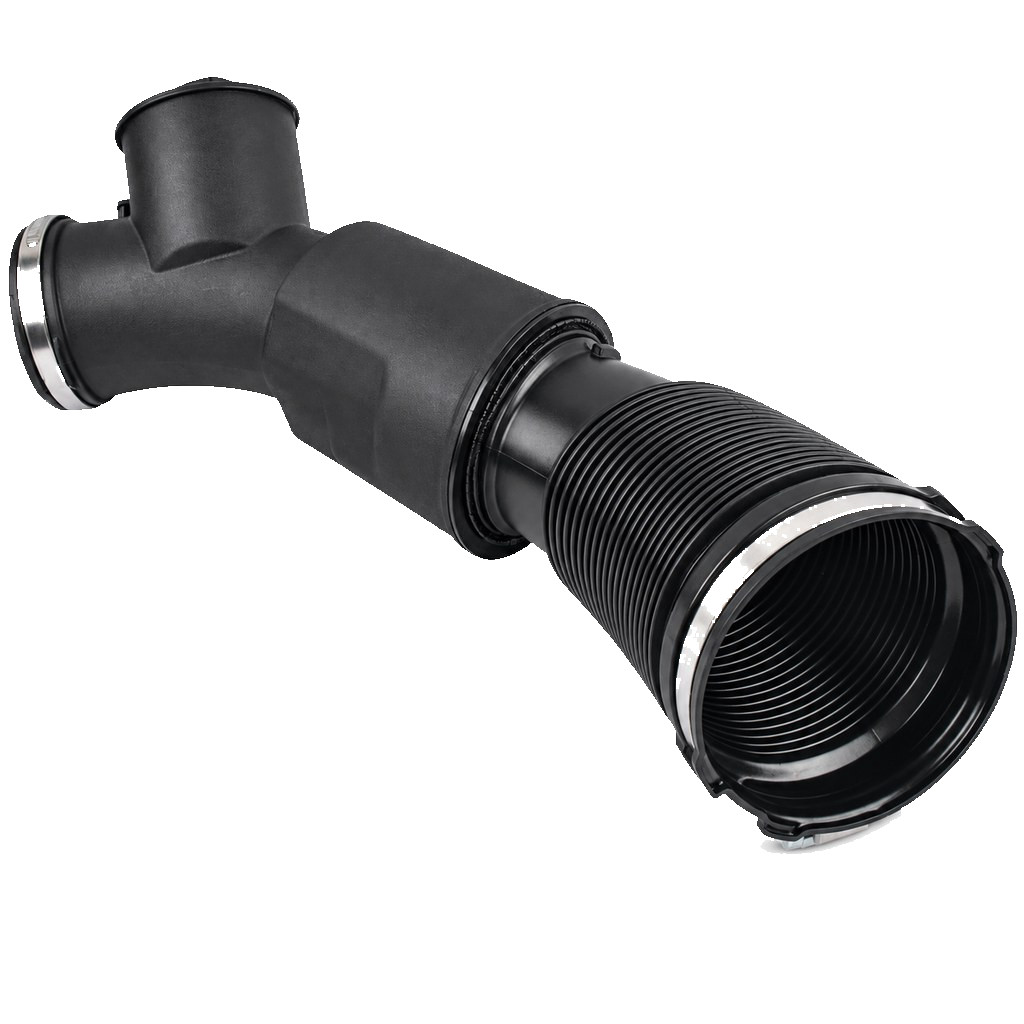
What an intake hose actually does
An air intake hose is a flexible connection in a system that has to stay airtight while two ends of the vehicle move independently. That single requirement explains everything about how it is built:
- It must seal. Any gap after the air mass sensor lets unmetered air into the engine — a classic cause of P0171 / P0174 lean codes and rough idle.
- It must flex. The engine rocks on its mounts; a rigid duct would crack at the first flange.
- It must handle heat. The hot side of the engine bay, close to the exhaust manifold and turbocharger, is a very different environment from the cold side.
- It must resist oil vapour. On many German engines, the crankcase ventilation system feeds back into the intake path, so the hose sees oil mist, not just air.
The materials we see on German applications
Across the Mercedes-Benz, VW Group, Audi, Skoda, Seat and Opel applications in our catalogue, the same material families keep coming back:
| Material | Where it is used | Why |
|---|---|---|
| EPDM | Most intake and air-filter ducting | Wide temperature range, excellent ozone and water resistance, good flex life |
| EPDM / NBR+PVC | Hoses that also see crankcase vapour | The NBR+PVC blend adds oil resistance that plain EPDM does not have |
| Silicone | Hot-side ducting, turbo inlet path | Highest heat resistance, stays flexible when cold; costs more |
| PP / PA66 / PBT-GF20 | Rigid ducts, connectors, air-box outlets | Dimensional stability and strength where flexibility is not needed |
| Non-woven fabric with steel reinforcement + PP connector | Mercedes-Benz breathing / vent hoses | Lightweight, heat-resistant, resists collapse under vacuum |
That last construction is worth knowing about. On several Mercedes-Benz applications the hose is not rubber at all — it is a non-woven fabric body with an internal steel wire and a moulded PP connector at the end. If you quote a rubber hose for an application that left the factory with a reinforced non-woven part, it will collapse under crankcase vacuum and come back as a warranty claim.
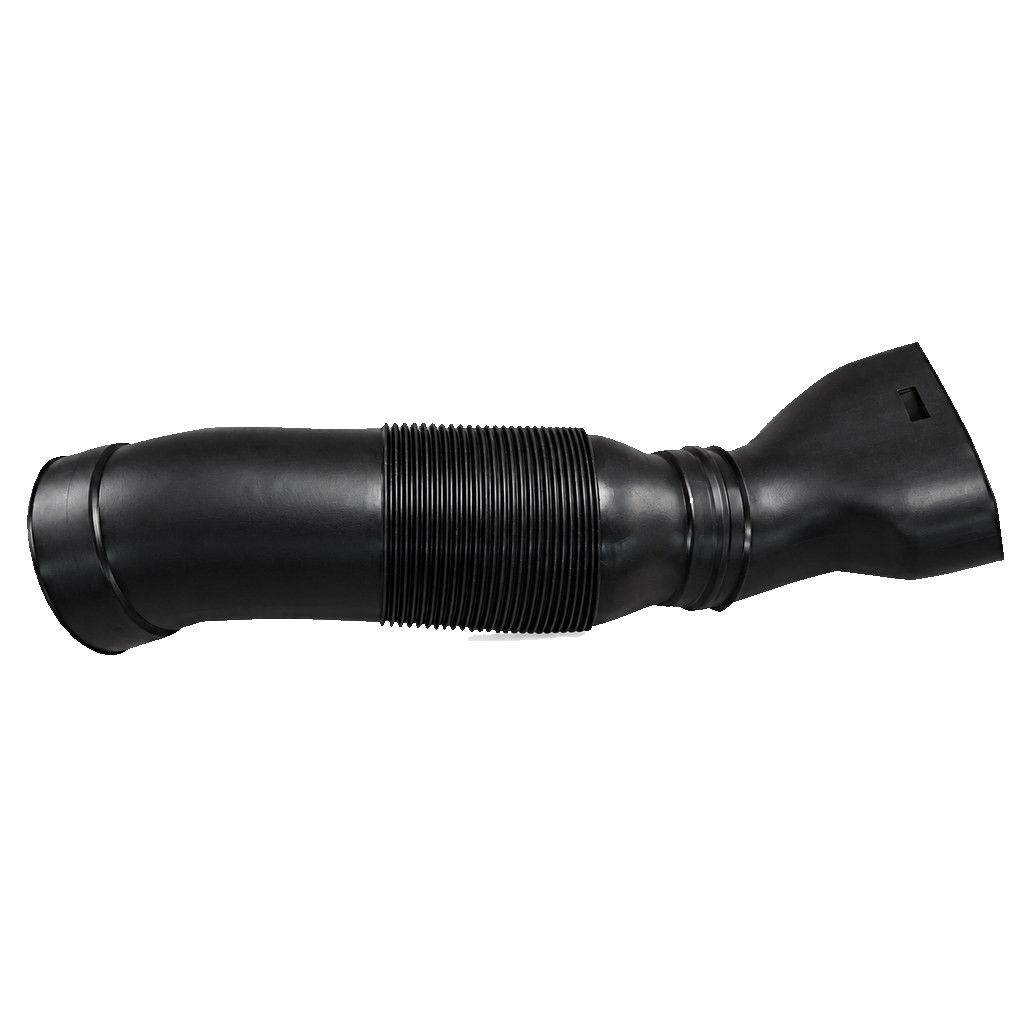
Reference numbers we are asked for most
The following numbers appear in our German-vehicle catalogue. Use them as a cross-reference starting point, then confirm by VIN or by measuring the original part.
| Reference (OE-style) | Application family as listed |
|---|---|
| 2045010282 | Mercedes-Benz |
| 2115010882 | Mercedes-Benz |
| 9065280182 | Mercedes-Benz Sprinter |
| 1K0145838P | VW, Audi, Skoda, Seat |
| 5N0145834D | VW Tiguan |
Reference numbers here are original-equipment part numbers, quoted so you can look a part up. They are a cross-reference aid, not a fitment guarantee — final fitment should always be checked against the vehicle or its VIN.
How these hoses fail
Most of the returns we see fall into five patterns:
- Heat cracking. Rubber hardens, then splits along the bend. Common on hoses routed close to the exhaust or turbo.
- Oil swelling and softening. Vapour-side hoses that were replaced with a non-oil-resistant rubber swell, go soft, and start weeping.
- Vacuum collapse. A non-reinforced hose fitted where the original was reinforced flattens under crankcase vacuum and starves the intake.
- Clamp damage. Over-tightened or wrongly sized clamps cut the wall at the bead.
- Wrong length or bend. A near-match number that is 15 mm short will pull the connector off the air box within a few thousand kilometres.
Every one of those failures is preventable at the point of ordering, which is why we ask buyers to send the original part number, a photo of the failed hose in place, and the inner diameter of both ends.
Quality checks we run before an order ships
- Dimensional inspection: inner and outer diameter, length, bend angle, connector position
- Burst pressure test on the pressurised side of the range
- Heat ageing and cold-flex tests on the rubber compounds
- Ozone resistance check
- Insertion and pull-off force on moulded connectors
- Visual inspection for flash, voids, wall thinning and reinforcement exposure
- Batch traceability: every carton carries the compound batch and production date

Buying intake hoses in wholesale quantities
FOB Auto Parts supplies air intake hoses, air-filter ducts and breather hoses for German, Japanese and Korean applications, packed for consolidated shipping and cross-dock distribution.
What we need from you to quote accurately:
- OE reference numbers, or photos plus measured inner diameters
- Target quantity per reference and whether mixed references can ship together
- Destination port and preferred Incoterm
- Any packing or labelling requirement for your market
Request a Quote on Air Intake Hoses
Need a quote on German-vehicle intake hoses? Send your reference list and quantities — we will come back with availability, MOQ and lead time.
Request a Quote →Frequently Asked Questions
Why does a German-vehicle intake hose fail while the engine still runs?
Because a split or softened hose leaks unmetered air downstream of the air mass sensor instead of stopping the engine. The usual evidence is a lean code (P0171 / P0174), a rough idle, a whistle, or black dust around the air box. The hose is often the last part inspected because the symptoms point at fuelling.
My Mercedes application used a fabric hose, not rubber — can I fit a rubber hose?
Not safely. Several Mercedes-Benz breathing and vent applications use a non-woven fabric body with an internal steel wire and a moulded PP connector. A plain rubber hose substituted there collapses under crankcase vacuum and comes back as a warranty claim. We quote that construction as a reinforced non-woven part.
Can you cross-reference a number that is no longer readable?
Yes, with the right inputs. Send the vehicle details (model, model year, engine variant) plus a photograph of the hose in place and the inner diameter of both ends. Where the reference falls outside the ranges we list, we will tell you plainly rather than substitute a similar-looking hose.
Which German applications do you cover?
Our catalogue covers Mercedes-Benz, the VW Group (VW, Audi, Skoda, Seat), BMW and Opel applications across air cleaner hoses, intake hoses, air filter ducts and breather hoses. Send the references you buy most and we will confirm coverage.
How are the hoses packed for export?
Hoses are protected against crushing and UV in transit, and every carton carries the compound batch and production date for traceability. Labelling and mixed-reference packing can be configured to your market — tell us the requirement when you request the quote.
Related Pages
- Air Intake Hoses & Air Filter Ducts: A Wholesale Buyer's Guide →
- Air Intake Hoses for Japanese Vehicles →
- Air Intake Hoses for Korean Vehicles →
- Browse the full FOB Auto Parts product range →
- All articles on the FOB Auto Parts blog →
Mercedes-Benz, VW, Audi, Skoda, Seat, Opel and BMW are trademarks of their respective owners. Part numbers are quoted for identification and cross-reference purposes only; FOB Auto Parts is an independent aftermarket supplier and is not affiliated with any vehicle manufacturer.