Air Intake Hoses for Japanese Vehicles: Toyota, Honda, Nissan, Mazda and Mitsubishi
Japanese engines are compact, tightly packaged and — in most of the world outside Japan — maintained by independent workshops rather than dealer networks. That combination is exactly why air intake hoses from this region sell in volume: a huge installed fleet, a short intake path folded into a small engine bay, and a parts channel that lives on cross-referenced numbers.
This guide covers the constructions used on Japanese applications, the reference number families that come up again and again, how these hoses actually fail, and how FOB Auto Parts supplies them in wholesale quantities.
What makes Japanese applications different
Three things change the way an intake hose is built on a Japanese platform.
The intake path is short and folded. On a transverse four-cylinder, air travels from the air box to the throttle body through a run of less than a metre, often in two or three sections. That means more bends per part, tighter radii, and a hose that has to flex in a very small space.
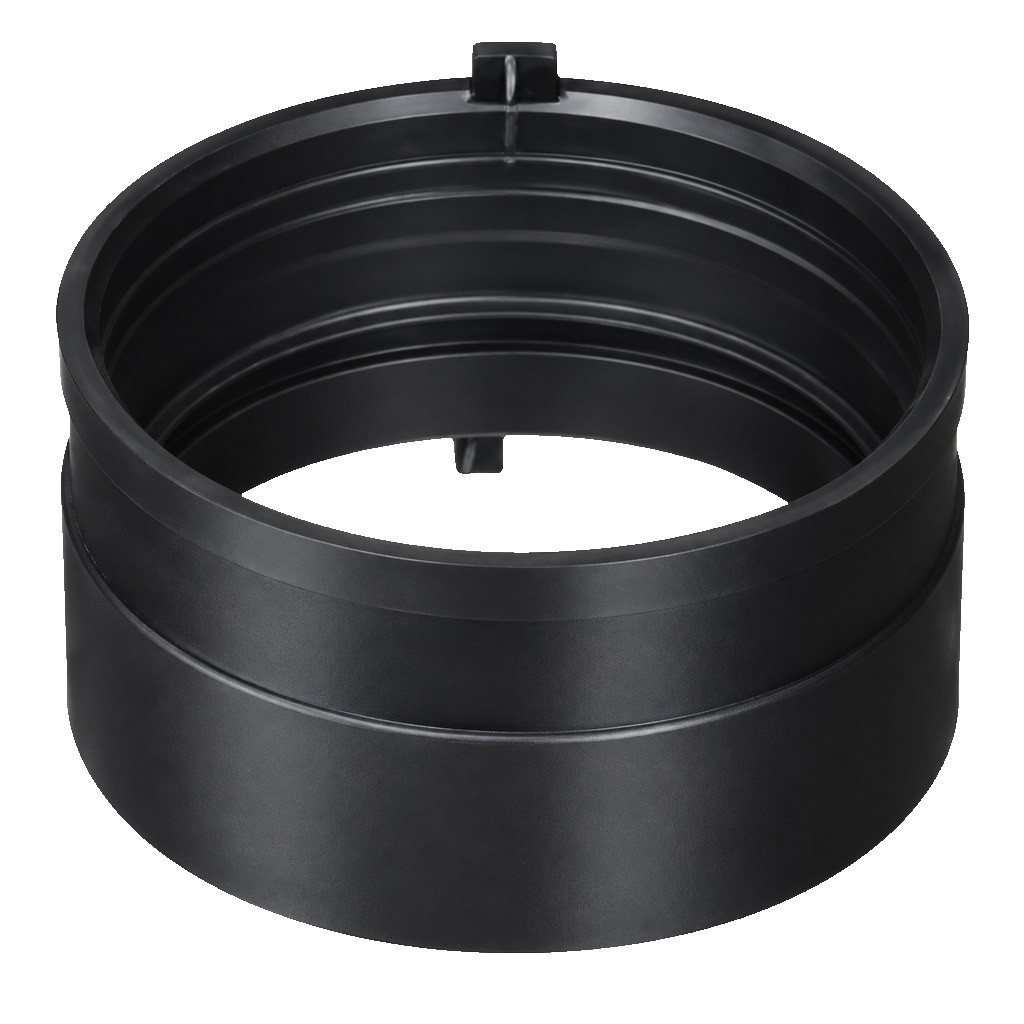
Plastic ducts are common. A large share of Japanese intake plumbing is not rubber at all. Rigid ducts and connector necks are moulded in PA66 or PBT-GF20 (glass-filled), and on some Nissan applications the number is a glass-filled plastic duct rather than a hose. Quote a rubber part into a plastic application and the first hot cycle will tell you.
Hoses carry crankcase vapour too. Japanese engines route blow-by back into the intake path, so the hose sees oil mist. A plain EPDM compound handles heat and ozone well but has limited oil resistance — which is why EPDM / NBR+PVC blends dominate this segment.
Materials we see on Japanese applications
| Material | Where it is used | Why |
|---|---|---|
| EPDM / NBR+PVC | Most air cleaner and intake hoses | Heat and ozone resistance from EPDM, oil resistance from the NBR+PVC blend |
| EPDM | Ducts on the cold side, breather hoses | Good flex life, wide temperature range |
| PA66 | Rigid ducts, connector necks | Dimensional stability, no swelling with oil vapour |
| PBT-GF20 | High-stiffness ducts and housings | Glass reinforcement holds shape under heat and load |
| EPDM + PA66 (assembled) | Hose-to-duct assemblies with moulded ends | Combines a flexible body with a rigid, repeatable connector |
Two practical consequences follow from that table. First, when a buyer sends only a photo, the material question cannot be answered — the same silhouette exists in rubber and in glass-filled plastic. Second, on assemblies where the hose is bonded or clamped to a moulded end, the connector position and its rotation angle matter as much as the length.
Reference numbers we are asked for most
The numbers below are taken from our Japanese-vehicle catalogue. Use them as a cross-reference starting point, then confirm against the vehicle or its VIN.
| Reference (OE-style) | Application family as listed |
|---|---|
| 17881-11350 | Toyota (interchanges with 17881-11410) |
| 17228-R40-A00 | Honda |
| 16576-ET00A | Nissan |
| AJ51-13-221 | Mazda |
| ME299409 | Mitsubishi |
Why one item can carry several numbers
Japanese intake hoses are frequently catalogued as a group of interchange numbers rather than a single part number. Our Toyota entries show this clearly: one item covers 17881-74390, 17881-74500, 17881-03060 and 17881-74840, and another pairs 17881-22120 with 17881-0D120. The same pattern appears on Honda, where a single item number pairs 17228-PNE-J00 with 17228-PNE-G00.
This is normal and it is useful — but it also means a buyer who sends one number out of a four-number family can be quoted a hose that is correct for the other three. Send the full list of numbers printed on the old part, or the VIN, and we match against the whole family.
How these hoses fail
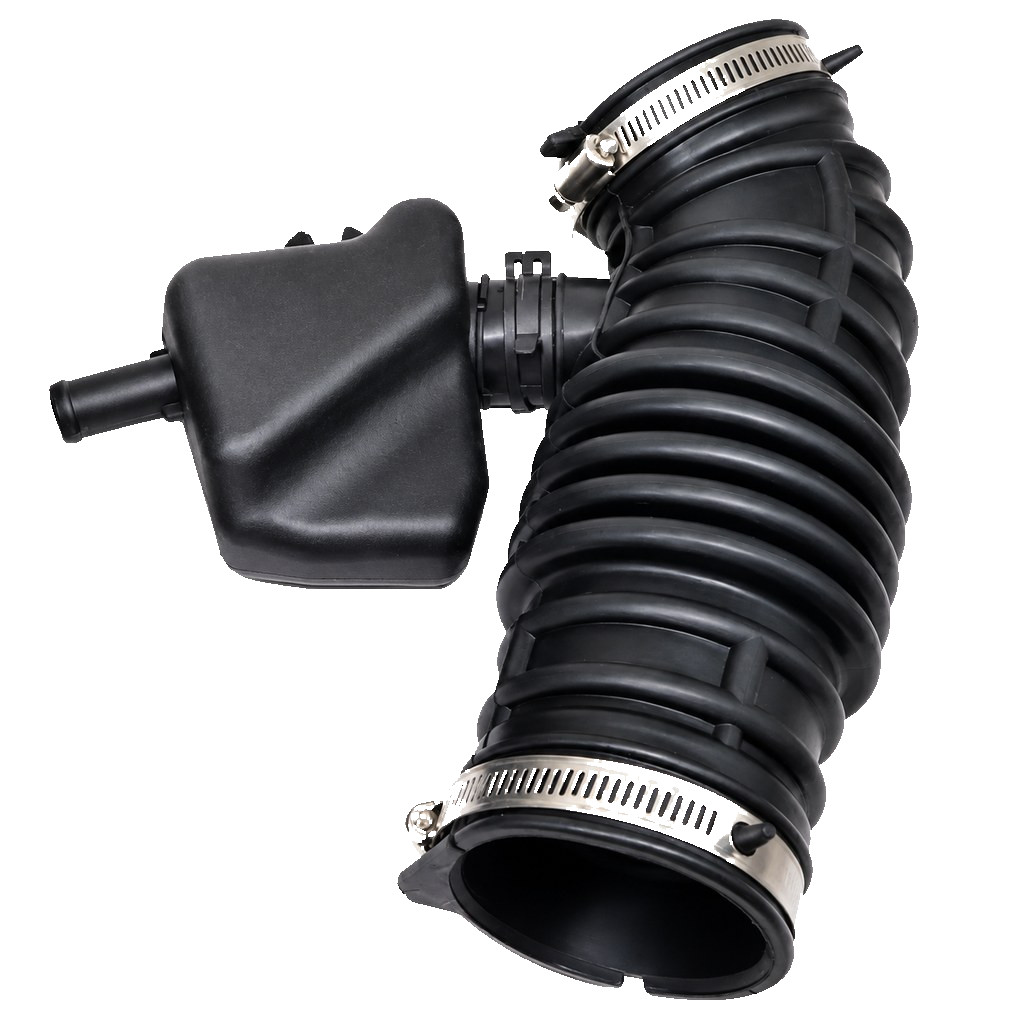
- Heat cracking along the bend. The tight radii of a Japanese engine bay put the highest stress exactly where the hose bends, close to the exhaust side.
- Oil swelling and softening. Vapour-side hoses replaced with a non-oil-resistant rubber go soft, weep, and eventually split at the clamp.
- Quick-connector failure. Where a hose ends in a moulded plastic connector, the loss is usually the retaining clip or a hardened O-ring — not the hose body. Fitting a full assembly when the connector is serviceable separately is the most common over-purchase we see.
- Cracked resonance chamber. Many Japanese air ducts carry an integral resonator. It cracks at the moulding seam and produces a whistle that customers report as a turbo or belt noise.
- Collapse under vacuum. A non-reinforced breather hose fitted where the original was reinforced flattens and starves the intake.
Quality checks we run before an order ships
- Dimensional inspection: inner and outer diameter, length, bend angle, connector position and rotation
- Burst pressure test on the pressurised range
- Heat ageing and cold-flex testing of the compound
- Ozone resistance check
- Pull-off and insertion force on moulded connectors and quick-connects
- Visual inspection for flash, voids, wall thinning and exposed reinforcement
- Batch traceability: compound batch and production date on every carton

Buying Japanese-application intake hoses in wholesale quantities
FOB Auto Parts supplies air cleaner hoses, intake hoses, breather hoses and plastic intake ducts for Japanese, German and Korean applications, packed for consolidated shipping.
What we need to quote accurately:
- OE reference numbers — the full interchange family where you have it — or photos plus measured inner diameters of both ends
- Target quantity per reference, and whether mixed references can ship together
- Destination port and preferred Incoterm
- Any packing or labelling requirement for your market
Request a Quote on Air Intake Hoses
Need a quote on Japanese-vehicle intake hoses? Send your reference list and quantities — we will come back with availability, MOQ and lead time.
Request a Quote →Frequently Asked Questions
Why do Japanese intake hoses have several numbers printed on them?
Because one service item is frequently superseded several times over the life of a platform, while remaining physically interchangeable. Manufacturers also publish different numbers for different markets using the same part. We build the item to cover the family and quote the interchange list rather than a single number.
Can one item really cover 17881-74390 and 17881-74500?
Yes. In the Toyota family these references are grouped as one item in our catalogue, in the same way that 17881-22120 pairs with 17881-0D120. Confirm by VIN or by measuring your original part if the application is critical.
What should I send for a Honda 17228 or Nissan 16576 enquiry?
The full reference as printed on the part, the vehicle model and model year, and the inner diameter of both ends. Where the number itself is in doubt, a photograph of the hose in place is enough for us to identify the routing and the connector style.
Do you supply the plastic ducts as well as the rubber hoses?
Yes — the Japanese range includes air cleaner hoses, intake hoses and moulded ducts, in EPDM and EPDM / NBR+PVC for the flexible parts and in PP or PA66 for the rigid necks and duct sections.
What are your MOQ and lead times?
Both depend on the reference and whether it is a stock line or made to order. Send the reference list with quantities per reference and we will come back with an offer including lead time.
Related Pages
- Air Intake Hoses & Air Filter Ducts: A Wholesale Buyer's Guide →
- Air Intake Hoses for German Vehicles →
- Air Intake Hoses for Korean Vehicles →
- Browse the full FOB Auto Parts product range →
- All articles on the FOB Auto Parts blog →
Toyota, Honda, Nissan, Mazda and Mitsubishi are trademarks of their respective owners. Part numbers are quoted for identification and cross-reference purposes only; FOB Auto Parts is an independent aftermarket supplier and is not affiliated with any vehicle manufacturer.