Air Intake Hoses & Air Filter Ducts: A Wholesale Buyer's Guide
Air intake hoses look like simple parts, and that is exactly why they cause so many failed orders. Two hoses can share a silhouette, a diameter range and a printed number family and still differ in compound, wall thickness and connector rotation — and only one of them survives a hot engine bay.
This guide is the entry point to our intake system category. It explains the five part families, the materials behind them, how to cross-reference a number correctly, what to inspect before shipping, and what we need from you to quote.
The five part families
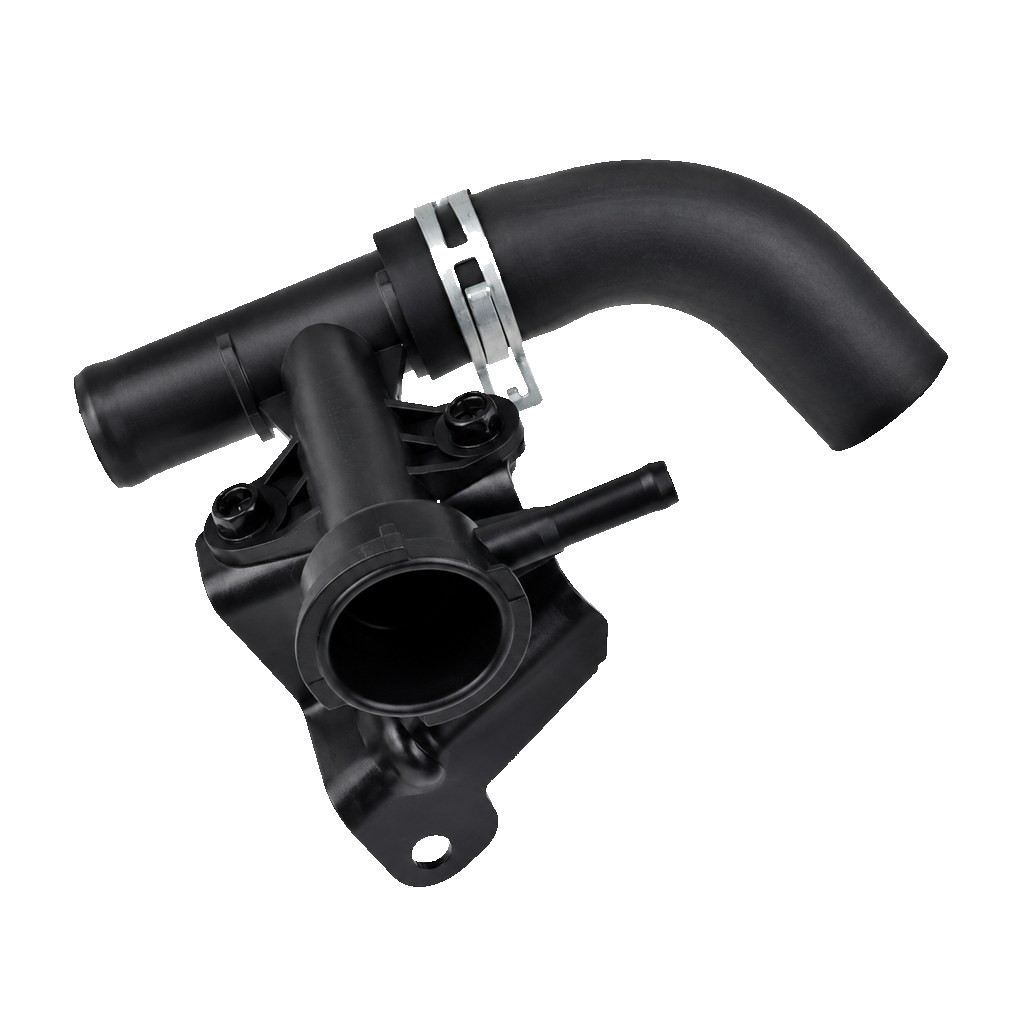
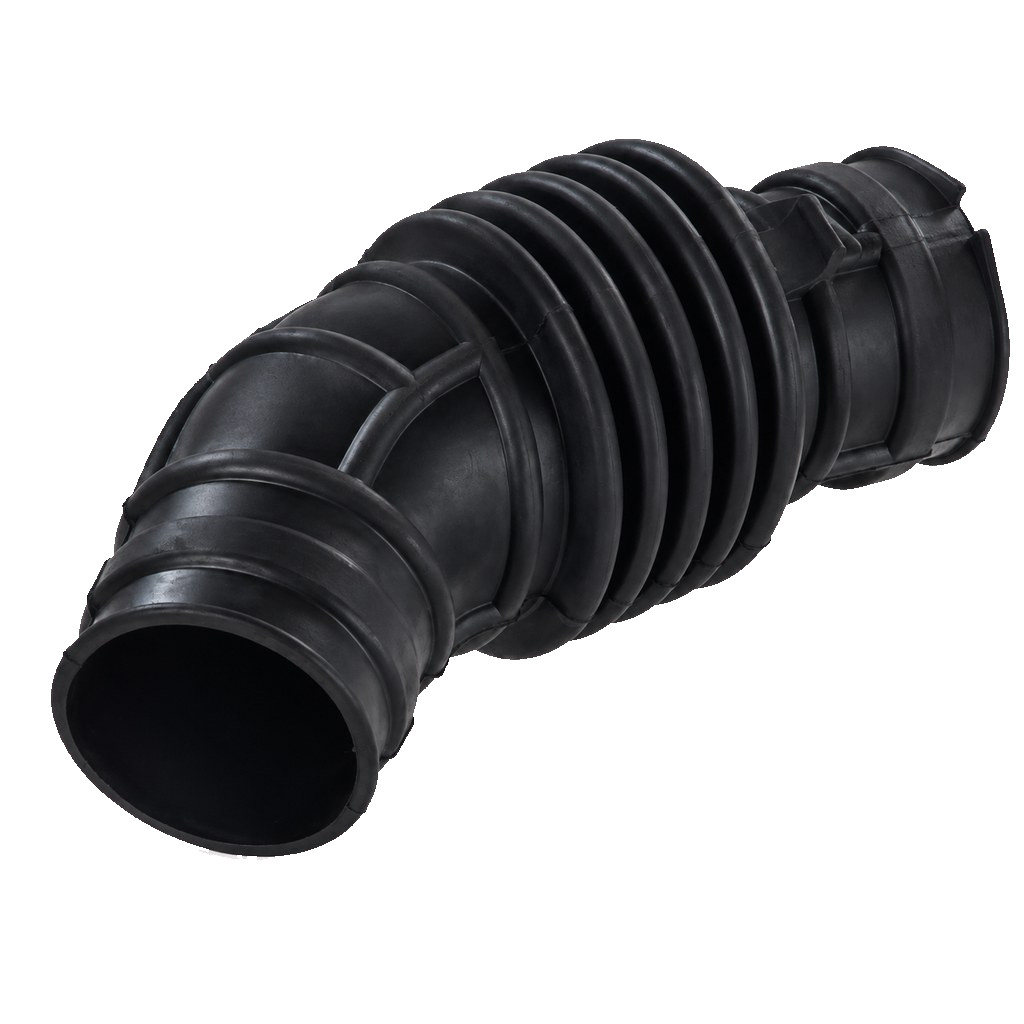
1. Air cleaner intake hoses. The moulded rubber hose that runs from the air cleaner box to the intake duct or the throttle body. Usually EPDM, often with a bonded connector at one or both ends.
2. Air filter ducts. Often rigid or semi-rigid, in PP, PA66 or PBT-GF20. These carry the straight runs and the connector necks; they do not flex, and they do not tolerate being crushed at the clamp.
3. Breather and crankcase ventilation hoses. Smaller bore, routed from the valve cover into the intake path. These see oil mist and are the parts most often replaced with the wrong compound.
4. Resonator and intake silencer sections. Integral chambers moulded into the duct. They crack at the moulding seam and produce a whistle that gets misdiagnosed as turbo or belt noise.
5. Hose-to-duct assemblies. A flexible body bonded or clamped to moulded ends. Here the critical dimensions are not just length and diameter but connector position and rotation angle.
Materials, and how to choose between them
| Material | Heat | Oil mist | Flex life | Typical use |
|---|---|---|---|---|
| EPDM | Excellent | Poor | Excellent | Cold-side ducts, breather hoses |
| EPDM / NBR+PVC | Very good | Good | Very good | The default for air cleaner and intake hoses |
| Silicone | Excellent | Fair | Good | High-temperature applications, performance use |
| NBR | Moderate | Excellent | Fair | Older applications specified in nitrile |
| PA66 | Very good | Excellent | None (rigid) | Ducts, connector necks |
| PP | Good | Very good | None (rigid) | Light rigid duct sections |
| PBT-GF20 | Very good | Excellent | None (rigid) | High-stiffness ducts and housings |
The single most expensive mistake in this category is quoting a hose into a plastic application, or the reverse. Photographs do not answer this question — a rubber hose and a glass-filled duct can be visually identical in a workshop photo. Confirm the material from the part, the vehicle, or the vehicle's documentation before ordering volume.
How to cross-reference an intake hose correctly
- Read the full number as printed. Dash placement and spacing vary between makers and even between catalogues for the same part.
- Expect families, not single numbers. One item frequently covers several interchange numbers — for example our Toyota entries group
17881-74390,17881-74500,17881-03060and17881-74840as one item, and pair17881-22120with17881-0D120. - Measure both ends. Inner diameter at each end, overall length, and the angle if the hose is bent. These three numbers resolve most mismatches that a number alone cannot.
- Check the connector. Bonded or moulded, straight or rotated, clip or bolt retained.
- Confirm the vehicle, not just the part. Model year and engine variant change intake routing more often than buyers expect.
Where a number is uncertain, our catalogue search is the fastest route: every reference number in this guide and in the vehicle-specific articles links straight into it.
How these hoses fail — and what that tells you to stock
- Heat cracking along the bend. Highest stress sits on the inner radius, close to the exhaust side.
- Oil swelling and softening. Vapour-side hoses in a non-oil-resistant compound weep and split.
- Connector separation. The bond line or retaining clip fails before the rubber body does.
- Cracked resonator. Whistling under load, traced to a seam crack rather than a rotating part.
- Collapse under vacuum. Non-reinforced hose substituted where the original was reinforced.
- Clamp cutting. Over-torqued clamps, or a neck slightly thicker than the original.
If you know which failure pattern drives returns in your market, that tells you which construction to buy — the part family is the same everywhere, the compounding is what differs.
Quality checks before an order ships
- Dimensional inspection: inner/outer diameter, length, bend angle, connector position and rotation
- Burst pressure test on the pressurised range
- Heat ageing and cold-flex testing of the compound
- Ozone resistance check
- Pull-off and insertion force on bonded, moulded and quick-connect fittings
- Visual inspection for flash, voids, wall thinning and exposed reinforcement
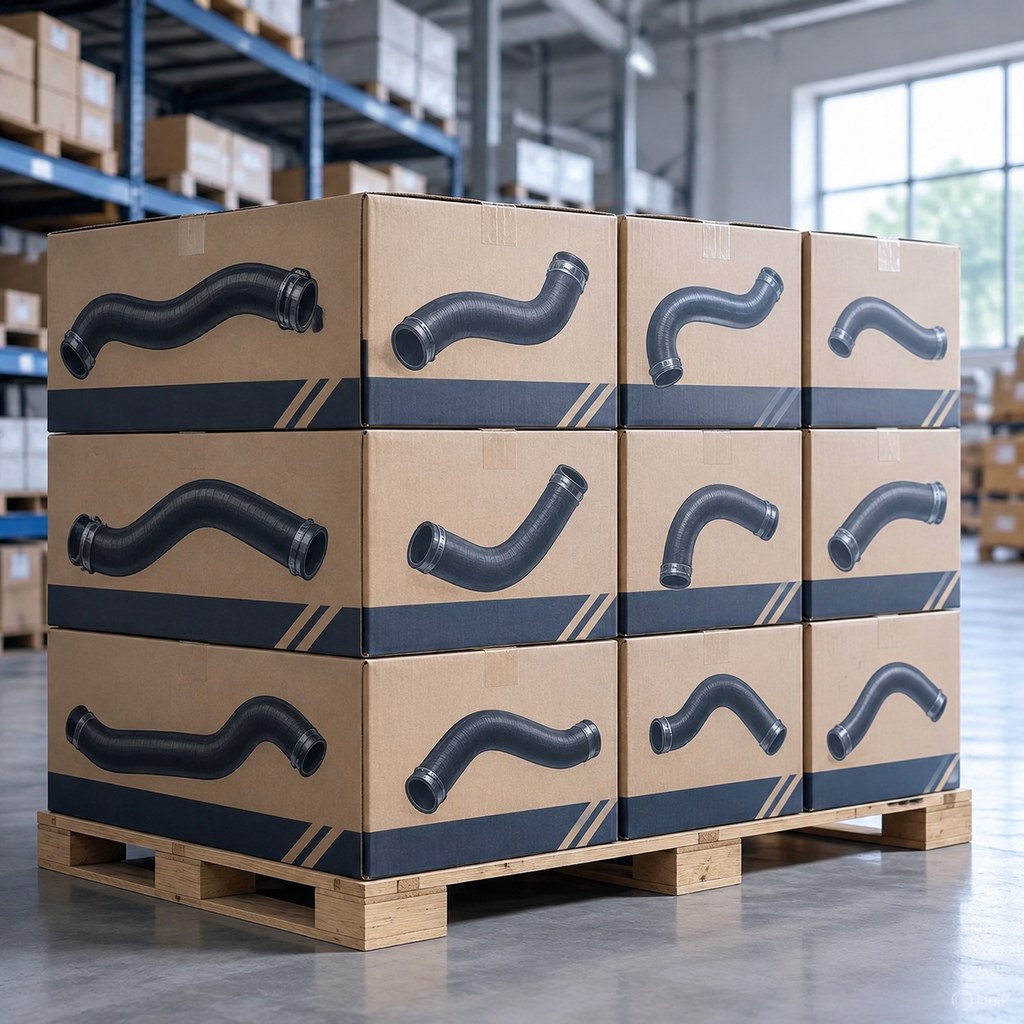
- Batch traceability: compound batch and production date on every carton
What we need to quote
- Reference numbers — the full interchange family where you have it — or photos plus measured inner diameters of both ends
- Material confirmation where the application could be plastic or rubber
- Target quantity per reference, and whether mixed references can ship together
- Destination port and preferred Incoterm
- Packing or labelling requirements for your market
FOB Auto Parts supplies air cleaner hoses, intake hoses, breather hoses and plastic intake ducts across German, Japanese and Korean applications, from a catalogue of several hundred active references.
Request a Quote on Air Intake Hoses
Working on an intake hose order? Send your reference list and quantities — we will come back with availability, MOQ and lead time.
Request a Quote →Frequently Asked Questions
What is the difference between an air intake hose and an air filter duct?
An intake hose is flexible — usually EPDM rubber or an EPDM / NBR+PVC blend — and absorbs engine movement between two points that move independently. An air filter duct is rigid or semi-rigid, moulded in PP, PA66 or PBT-GF20, and carries the straight runs and connector necks. Quoting one into the other application is the single most expensive mistake in this category, so confirm the material from the part or the vehicle before ordering volume.
Can you supply one reference that covers several interchange numbers?
Yes — that is normal in this category. One item frequently covers a family of numbers: our Toyota entry for example groups 17881-74390, 17881-74500, 17881-03060 and 17881-74840 as a single item. Send the full number family where you have it, and we will confirm which references the item is built to cover.
What measurements do you need if I only have the old hose?
Inner diameter at both ends, overall length, and the bend angle if the hose is formed. Add a photograph of the failed hose in place and we can usually resolve the routing and connector rotation as well. Those three dimensions resolve most mismatches that a part number alone cannot.
Which materials do you hold for volume orders?
EPDM and EPDM / NBR+PVC for flexible intake, air cleaner and breather hoses; silicone for hot-side ducting; and PP, PA66 and PBT-GF20 for rigid ducts and connector necks. Compounds are quoted against the application, and hot-side or vapour-side parts are specified with the correct compound rather than a general-purpose rubber.
What are your MOQ and lead times?
MOQ and lead time depend on the reference and on whether it is a stock line or made to order. Send the reference list and the quantity per reference and we will reply with pricing, MOQ and lead time.
Related Pages
- Air Intake Hoses for German Vehicles: Mercedes-Benz, VW Group, BMW, Opel →
- Air Intake Hoses for Japanese Vehicles: Toyota, Honda, Nissan, Mazda →
- Air Intake Hoses for Korean Vehicles: Hyundai, Kia, Daewoo →
- Browse the full FOB Auto Parts product range →
- All articles on the FOB Auto Parts blog →
Mercedes-Benz, BMW, Volkswagen, Audi, Škoda, SEAT, Opel, Toyota, Honda, Nissan, Mazda, Hyundai, Kia and Daewoo are trademarks of their respective owners. Part numbers are quoted for identification and cross-reference purposes only; FOB Auto Parts is an independent aftermarket supplier and is not affiliated with any vehicle manufacturer.