Air Intake Hoses for Korean Vehicles: Hyundai, Kia, Daewoo and GM Korea
Korean-platform vehicles now dominate the affordable end of the fleet in Africa, the Middle East, Central Asia and Latin America — and that is where the aftermarket volume sits. The parts themselves are straightforward: mostly rubber air cleaner hoses with a short, tight routing. What is not straightforward is the numbering, because Hyundai and Kia share a huge amount of intake plumbing while also issuing brand-specific number series.
This guide covers the constructions and number families we actually see on Korean applications, how these hoses fail, and how FOB Auto Parts supplies them in wholesale quantities.
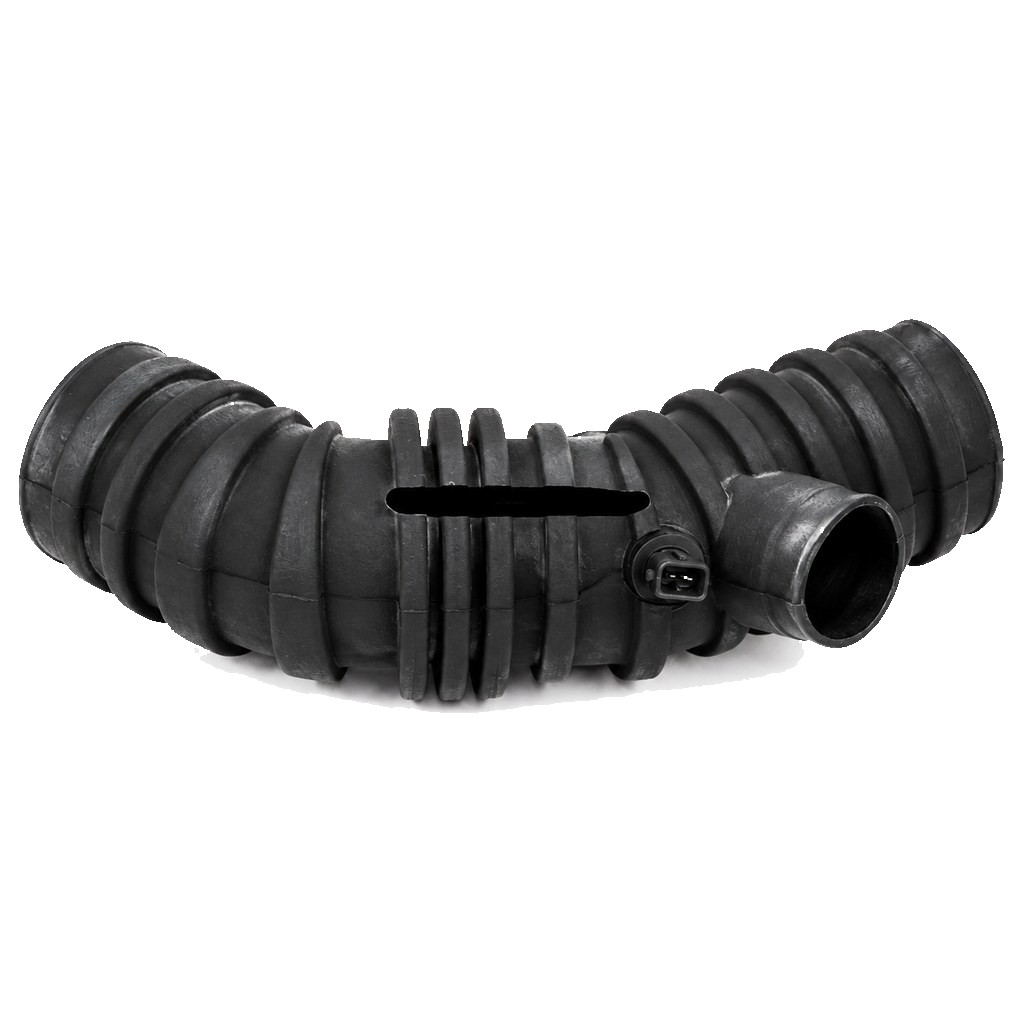
The numbering trap on Korean applications
Two things decide whether a Korean-application quote lands correctly.
Hyundai and Kia share parts. A number like 28140-2P200 appears under Hyundai units, and the same number turns up fitted to Kia models. The intake plumbing for a shared platform is usually identical — so buyers who maintain two separate lists for Hyundai and Kia often end up ordering the same hose twice under different line items.
Kia also issues its own number series. Kia-designated numbers carry a K in the prefix — 0K60N13340 and 0K60N-13340A are the same family as OK60N-13 340, written three different ways in circulation. When a workshop reads a number off a part, spacing and dash placement vary; the significant characters are the same.
The practical rule: quote against the full number string as printed, and tell us the model and year. We match on the family, not on the spacing.
Materials we see on Korean applications
| Material | Where it is used | Why |
|---|---|---|
| EPDM / NBR+PVC | The large majority of air cleaner and intake hoses | Heat and ozone resistance plus oil resistance for blow-by vapour |
| EPDM | Cold-side ducts, breather hoses | Flex life and wide temperature range |
| PP | Rigid duct sections | Light, cheap, dimensionally stable where no flex is needed |
| NBR rubber | Selected older applications | Oil resistance where the original compound was specified that way |
Korean intake hoses are overwhelmingly rubber-bodied, which is good news for sourcing: a well-specified EPDM/NBR+PVC compound with a clean bonded connector covers most of the range.
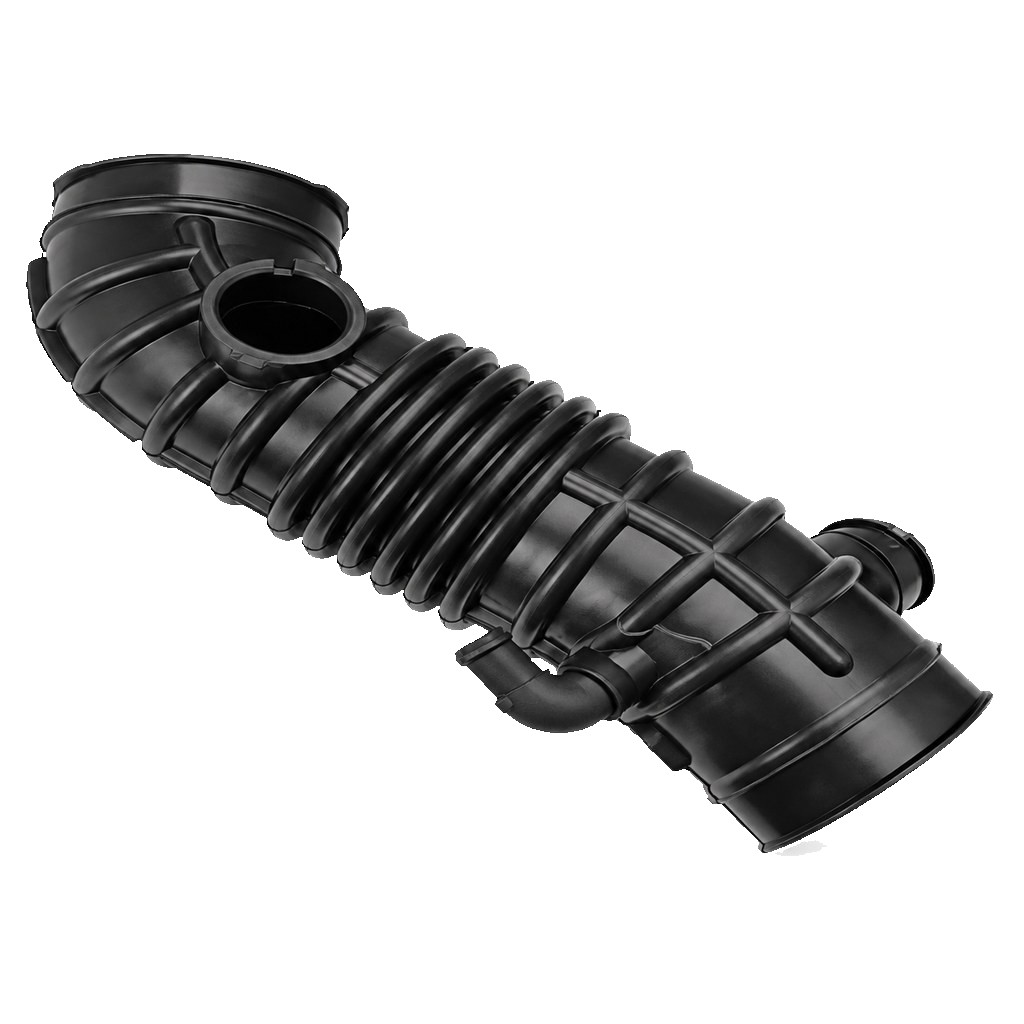
Reference numbers we are asked for most
The numbers below are taken from our Korean-vehicle catalogue. Use them as a cross-reference starting point, then confirm against the vehicle or its VIN.
| Reference (OE-style) | Application family as listed |
|---|---|
| 28140-1Y200 | Hyundai |
| 28138-20052 | Hyundai / Kia air cleaner hose |
| 0K60N-13340A | Kia (also written OK60N13340 / OK60N-13 340) |
| 96350692 | Daewoo |
| 90222002 | Daewoo / GM Korea |
Two notes on that table, because they come up in every RFQ conversation:
- The
28138-,28140-and28161-*families are the air cleaner hose and intake hose families on Hyundai-Kia platforms. If you can identify the family, we can usually identify the variant. - Daewoo and GM Korea numbers are numeric (
96xxxxxx,90xxxxxx) rather than the dash-form Hyundai pattern. Older units in circulation still carry Toyota- and Mazda-style numbers on the same catalogue page, because those vehicles were assembled with those components — if you see a*-13-220on a Daewoo line, it is a Mazda-pattern number, not a mistake.
How these hoses fail
- Heat cracking at the bend. The most common failure on a hard-worked Korean engine bay: the outer wall hardens and splits along the inner radius.
- Oil swelling from blow-by vapour. Fitting a plain rubber hose where the original was an EPDM/NBR+PVC blend leads to softening, weeping and clamp slip.
- Bonded connector separation. On hoses with a vulcanised connector, the bond line fails before the rubber does. Pull-off testing at our QC stage exists precisely because of this.
- Clamp damage and wall cutting. Over-torqued clamps cut the wall at the bead; a common root cause is a hose supplied slightly thicker at the neck than the original.
- Wrong variant. Korean applications change intake routing across model years with the same silhouette. A 10 mm difference in overall length pulls the connector off under engine movement.
Quality checks we run before an order ships
- Dimensional inspection: inner and outer diameter, length, bend angle, connector position
- Burst pressure test on the pressurised range
- Heat ageing and cold-flex testing of the compound
- Ozone resistance check
- Pull-off and insertion force on bonded and moulded connectors
- Visual inspection for flash, voids, wall thinning and exposed reinforcement
- Batch traceability: compound batch and production date on every carton

Buying Korean-application intake hoses in wholesale quantities
FOB Auto Parts supplies air cleaner hoses, intake hoses and breather hoses for Korean, Japanese and German applications, packed for consolidated shipping and cross-dock distribution.
What we need to quote accurately:
- OE reference numbers (the full string as printed) plus model and year where known, or photos with measured inner diameters of both ends
- Target quantity per reference, and whether mixed references can ship together
- Destination port and preferred Incoterm
- Any packing or labelling requirement for your market
Request a Quote on Air Intake Hoses
Need a quote on Korean-vehicle intake hoses? Send your reference list and quantities — we will come back with availability, MOQ and lead time.
Request a Quote →Frequently Asked Questions
Why do Hyundai and Kia numbers look interchangeable but are not always?
Hyundai and Kia share many platforms, so a 28140 or 28138 family number can appear on both — but the same digits do not always describe the same hose. Connector rotation, length and the presence of a resonator chamber differ between applications. Treat a shared number as a lead, then confirm by VIN or by measuring the original part.
What does the 28140 / 28138 / 28161 family cover?
These are Hyundai and Kia intake and air cleaner hose families, covering applications from small hatchbacks to SUVs. Our catalogue lists them with the application family, and where an item carries several interchange numbers we quote them as a group.
Can you match Daewoo and GM Korea references?
Yes. The Daewoo and GM Korea applications are numbered in a different style — numeric references such as 96350692, 96180035 and 96239412 rather than the 28140 pattern — so an enquiry that quotes the numeric reference is usually the fastest route to a match.
Which materials do the Korean-application hoses use?
EPDM for the general intake and air cleaner hoses, EPDM / NBR+PVC where the hose also sees crankcase vapour, and PP or PA66 for moulded ducts and connector necks. Confirm the material from the part before ordering volume, because a rubber and a glass-filled duct can look identical in a workshop photograph.
What are your MOQ and lead times?
MOQ and lead time depend on the reference and whether it is a stock line or made to order. Send the reference list and quantity per reference and we will reply with pricing, MOQ and lead time.
Related Pages
- Air Intake Hoses & Air Filter Ducts: A Wholesale Buyer's Guide →
- Air Intake Hoses for German Vehicles →
- Air Intake Hoses for Japanese Vehicles →
- Browse the full FOB Auto Parts product range →
- All articles on the FOB Auto Parts blog →
Hyundai, Kia, Daewoo and Chevrolet are trademarks of their respective owners. Part numbers are quoted for identification and cross-reference purposes only; FOB Auto Parts is an independent aftermarket supplier and is not affiliated with any vehicle manufacturer.