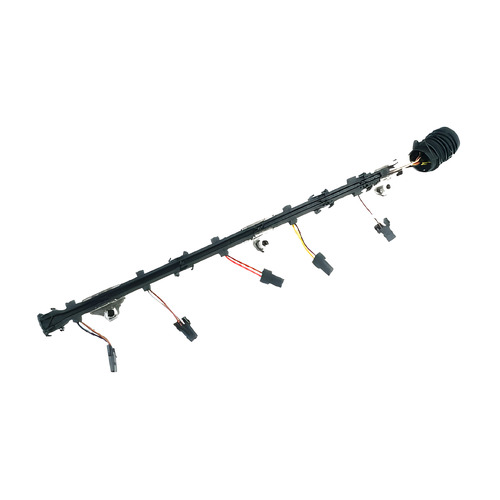
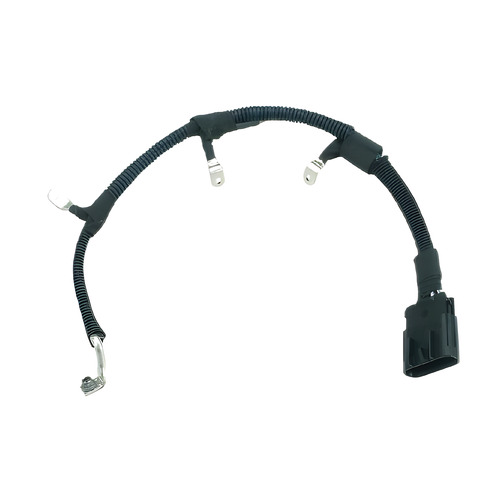
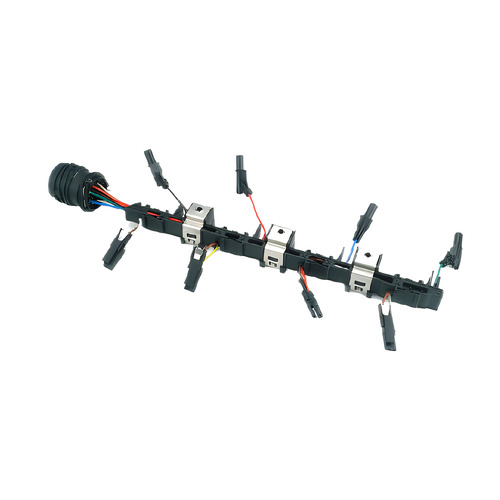
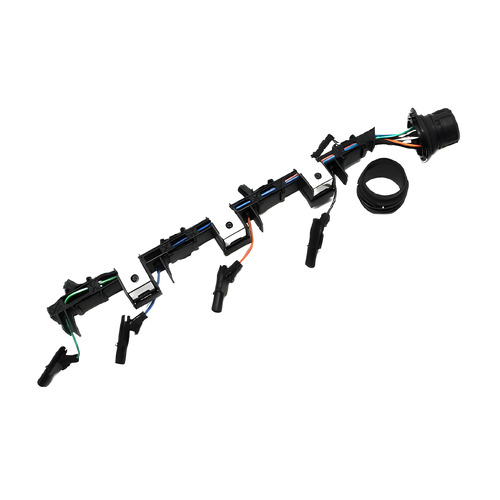
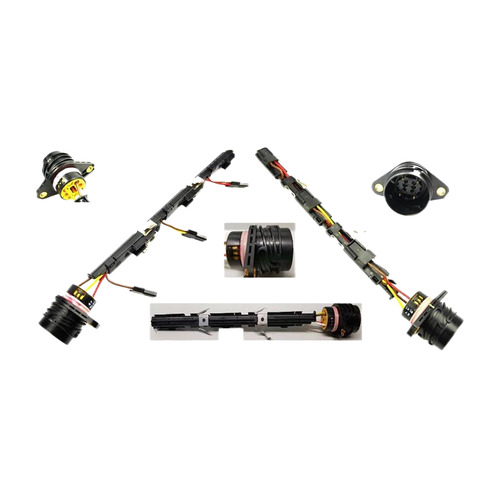
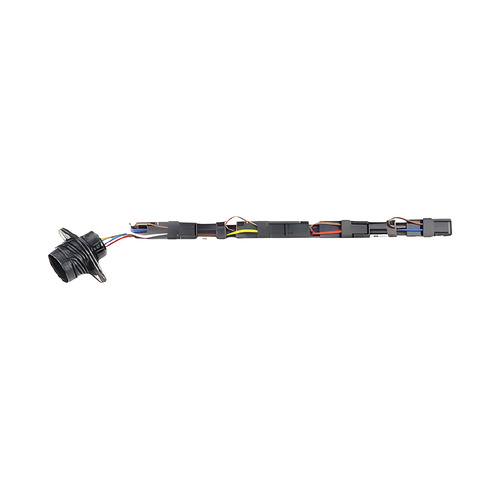
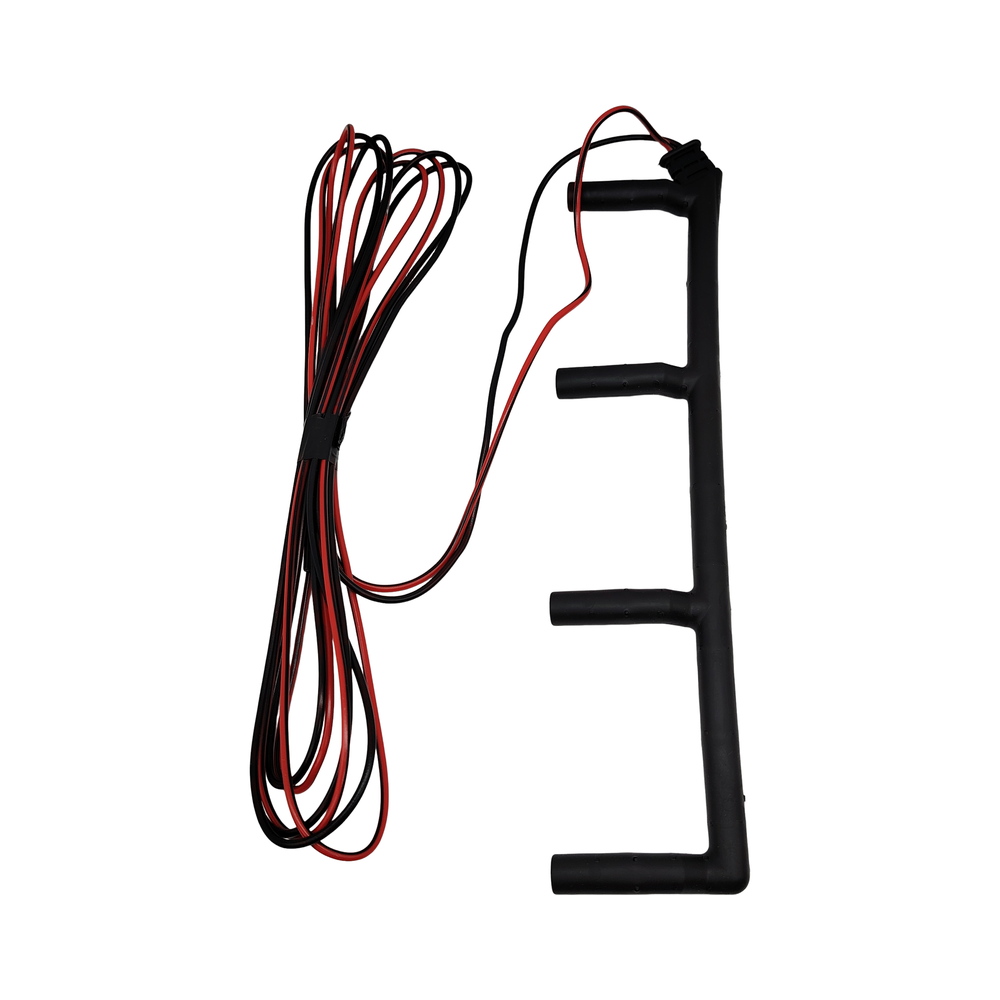
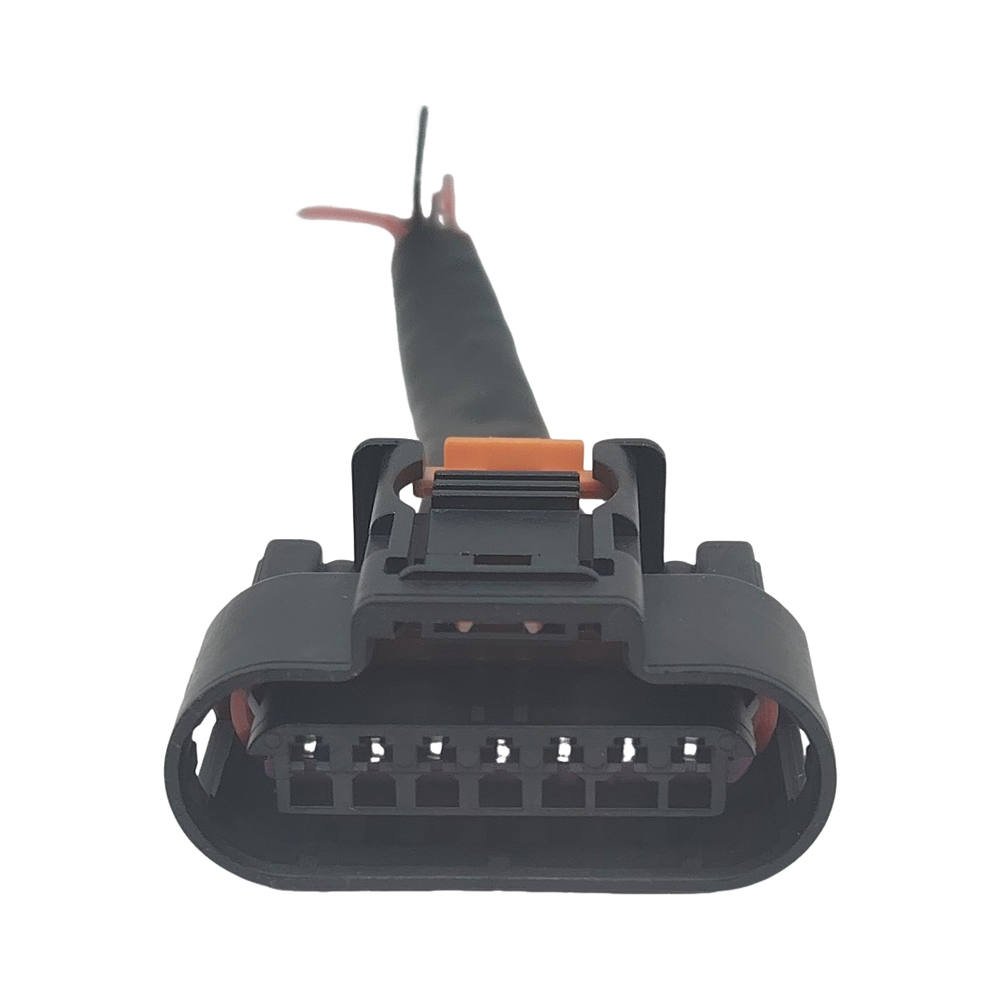
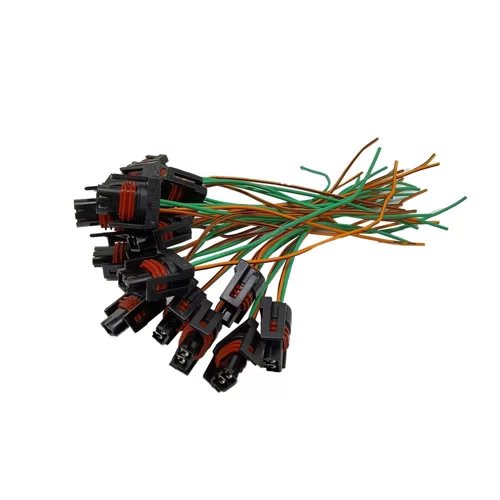
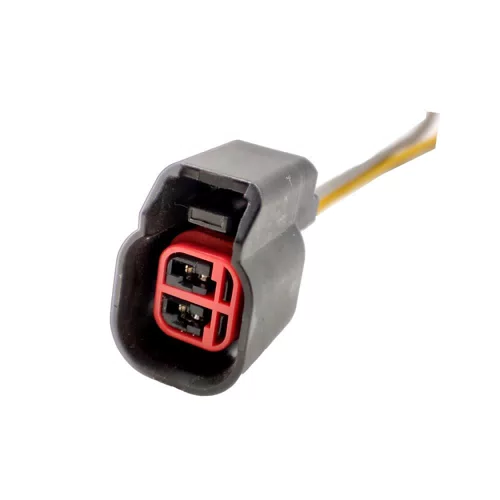
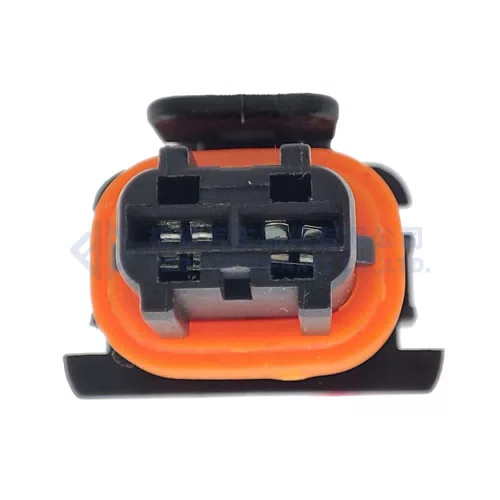
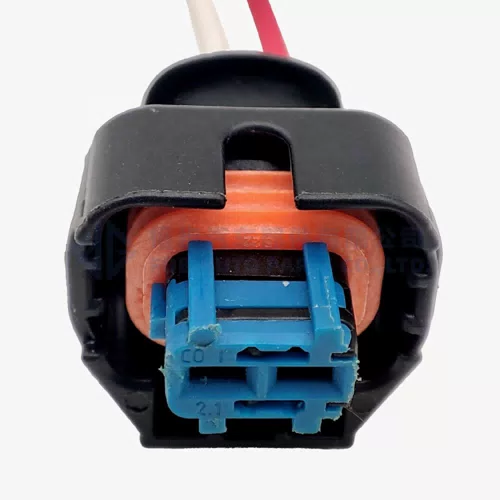
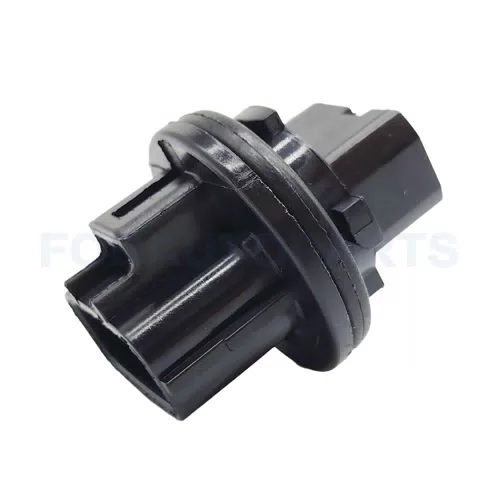
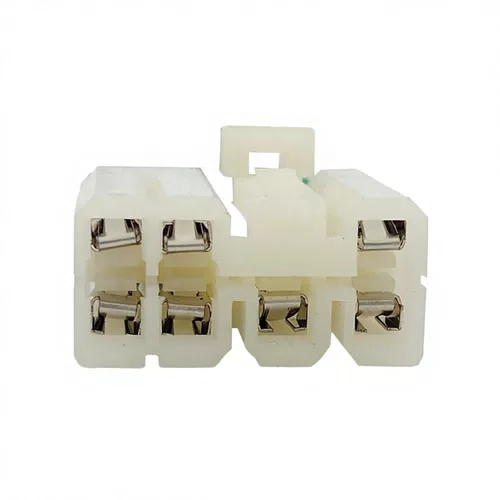
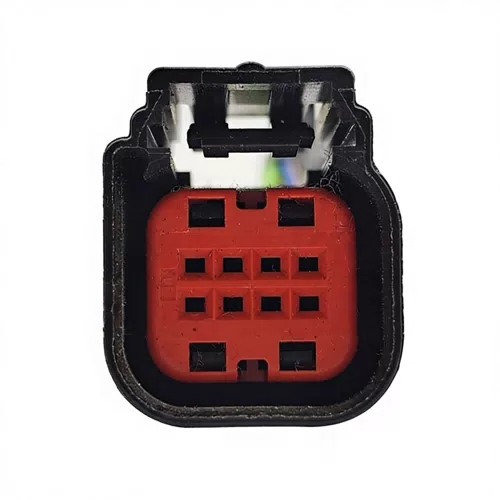
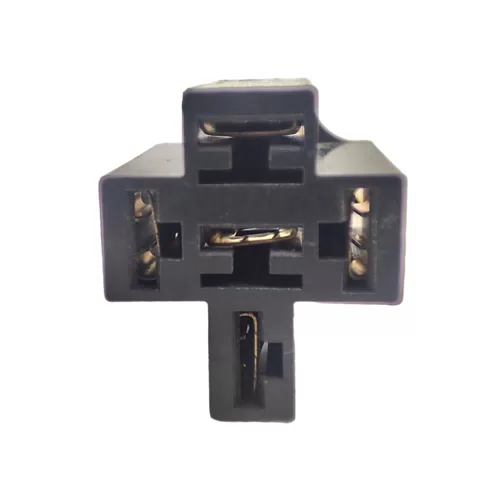
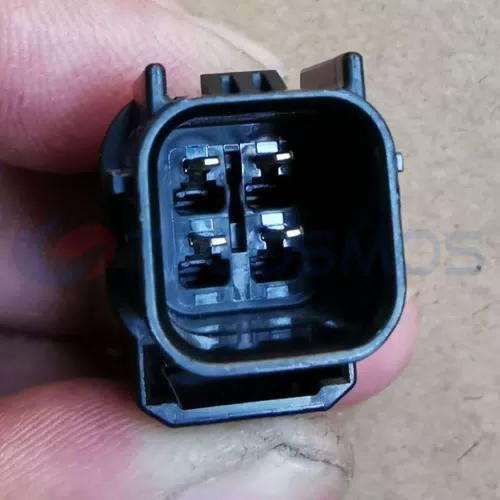
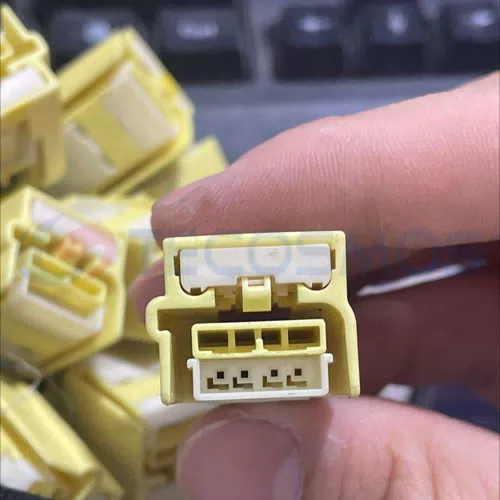
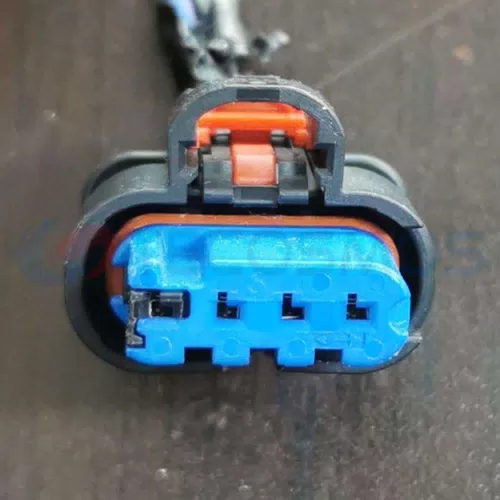
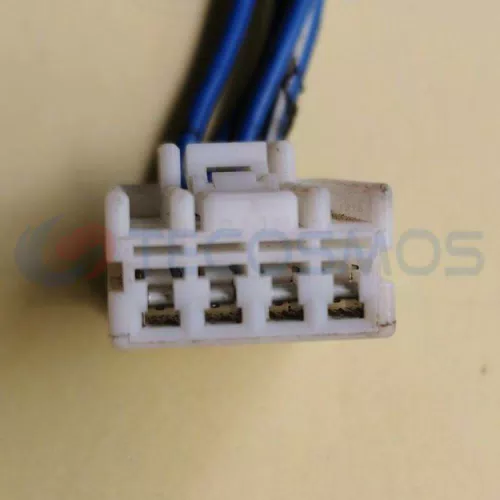
Browse 5,427 Connectors & Wiring part numbers with OE cross-reference and fitment notes for passenger cars, SUVs, pickups and vans. Export packing available - send an inquiry for price and lead time.
A connector and a harness are bought by shell number, not by vehicle. The moulded reference on the housing fixes the cavity count, the keyway and the latch, and the same shell turns up on a Volkswagen Golf, a Skoda Octavia and a Seat Ibiza because all three used the same loom end. Order by model name and you get a plug that looks right in a photograph and will not latch in the vehicle. This page groups every connector, terminal, pigtail and loom end we hold so an electrical buyer can quote a full harness programme from one place.
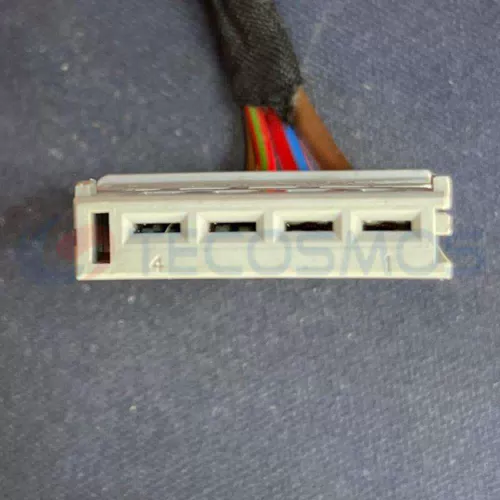
This category carries 5,426 references across five sub-families: Auto Connectors with 2,700 housings, Harnesses with 2,466 loom ends, Connectors & Terminals with 174 terminal and seal items, Pigtails & Sockets with 85 pre-crimped repair leads, and Wiring Harness for complete-loom references. Volume sits in body and sensor connectors built around the German 1J0 and 4H0 families and the Japanese Sumitomo and Yazaki patterns: 1J0973724 four-pin for VW, Audi, Skoda and Seat looms, 1J0 972 722 four-pin for seat heaters, fuel tank switches and tail lights, 4H0973713 and 4H0973713B six-pin engine-bay shells, 90980-11028 four-way for Toyota and Lexus oxygen sensors, 7283-8851-30 for Nissan Juke, Micra and Qashqai, 1-967616-1 three-pin for GM and Delphi throttle position sensors, 174257-2 four-pin female for Ford Focus C-Max, and 8E0 971 934 for the LPG converter circuit on Audi and VW. Battery isolator switches SW-CCM8 and SW-CCM10 and five-pin relay sockets sit in the same section because they sell to the same electrical buyers.
Four dimensions identify a housing before price is discussed: cavity count, keyway position, latch type and whether the shell is sealed. Cavity count alone is not enough, because the same four-pin count exists in two keyway orientations, and forcing a plug past its keyway spreads the terminal spring, which reads fine on a bench meter and fails under vibration in service. Terminals are specified separately from the shell: tin-plated brass for general body circuits, gold-flashed contacts where the circuit runs at low current and the connector sits in a damp footwell or an engine-bay position that sees washdown. Wire gauge attaches to the terminal, not to the housing, and the bulk of this range covers 0.5 to 2.5 mm² (20 to 14 AWG) for body and sensor looms, with heavier 4 and 6 mm² terminals for main feeds. State the wire cross-section with the order, or the terminal gets matched to the wrong cavity size.
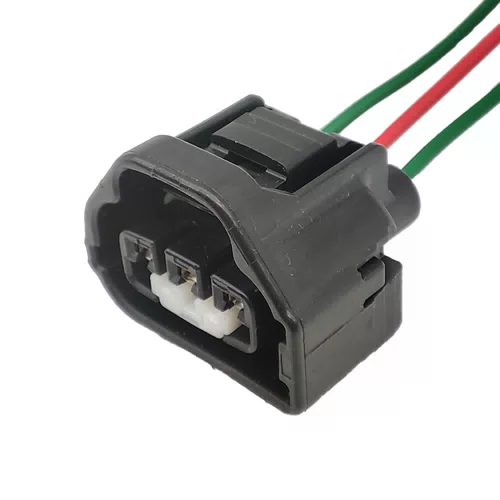
Three supply forms are sold under the same words and none of them is substitutable in a quotation. Housing only is the bare plastic shell: terminals, cavity plugs and wire seals are ordered separately. A kit is the shell with its terminals, seals and cavity plugs in one bag. A pigtail is the shell with a length of harness already crimped and sealed, ready to splice into the vehicle loom. Most repair shops want the pigtail; most harness builders want the bare housing and crimp their own terminals. The minimum is one full carton per reference, mixed references consolidate into a single shipment, and two to five sample pieces per reference are available before a production order so keyway, latch and terminal retention can be checked on the vehicle loom first. Packing is neutral bag and carton, our own brand, or your artwork with your part number on the label. Production lead time is 7 to 15 days for a stocked reference and 25 to 35 days where terminals have to be crimped onto a pigtail assembly.
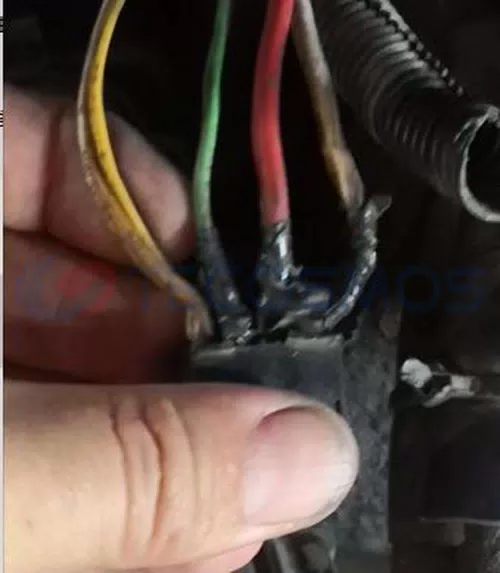
Fitment is confirmed against the reference moulded on the shell, not against the vehicle model, because one loom often carries three different shell families and a single model year can use different connectors at the same position across markets. Where the number is worn off, a photograph of the terminal face square-on plus one of the latch side, with the wire colours in the cavities, identifies the family faster than any catalogue lookup. Incoming terminals are checked for plating and retention force, and every pigtail is pull-tested at the crimp before packing. To quote, send the shell references with quantity per reference, the supply form you need (housing, kit or pigtail), the wire gauge, the destination port, and whether packing is neutral or branded.
One full carton per reference is the economical minimum, and mixed references consolidate into a single shipment. For a reference you have not bought before we supply two to five sample pieces ahead of a production order so the keyway, latch and terminal retention can be checked on the vehicle loom first. Send your target quantity per reference and we quote against that.
Stocked housings, terminals and seals ship as samples within three to five working days. A pigtail made to a specific length, wire colour and terminal is a made-to-order item and takes seven to twelve working days for samples, with the production lead time confirmed on the quotation.
It depends on who does the repair. A harness builder with crimp tooling wants the bare housing and buys terminals and seals separately. A workshop without terminal tooling wants the pigtail, which splices into the existing loom and needs no crimping. A kit sits between the two. The three carry very different prices and are quoted separately.
Tin-plated brass is standard for body circuits and covers most of the range. Gold-flashed contacts are available for low-current signal circuits in damp locations such as footwells, and for engine-bay connectors that see washdown. Tell us which circuits the terminals go into and we confirm plating before quoting, because mixing the two in one connector is a corrosion problem rather than a price problem.
Quote the cross-section in mm2 or the AWG alongside each terminal reference. Most body and sensor circuits here use 0.5 to 2.5 mm2, with 4 and 6 mm2 terminals for main feeds. The terminal is matched to both the wire gauge and the cavity size, so a correct shell with the wrong terminal will either refuse to crimp or refuse to latch.
Sealed housings carry a separate wire seal and cavity plug and are required anywhere the connector sees water, splash or engine-bay washdown. Unsealed housings are cheaper and are the correct choice inside the cabin or behind a sealed trim panel. Each listing states which type the reference is. Where the original is sealed, order the sealed version even if the unsealed one is cheaper.
Tell us the OE numbers, quantities and destination port. We confirm fitment against your references and quote with export packing options.